
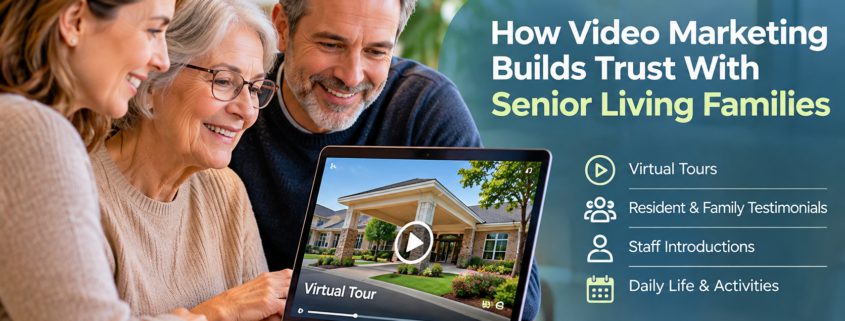
How Video Marketing Builds Trust With Senior Living Families
Why Senior Living Families Need More Than a Brochure
Choosing a senior living community is a major decision. For many families, the process involves comparing care options, reviewing costs, visiting communities, and discussing what feels right for a loved one.
Adult children often help parents research available options. They want to understand what daily life looks like before arranging a tour.
Brochures can explain services, amenities, and pricing. But video can help answer another important question: What does it actually feel like to be there?
Senior living video marketing helps communities answer that question by showing real spaces, introducing staff, and sharing authentic resident experiences.
For senior living marketers, that makes video a useful part of the decision process.
Why Senior Living Video Marketing Helps Families Evaluate a Community
Photos and brochures provide a helpful introduction, but they cannot show every aspect of daily life.
A well-produced video can introduce staff, show common areas, explain activities, and let families hear directly from residents.
For someone researching from another city, that additional context can be especially helpful.
Video does not replace an in-person visit. It helps families decide whether a community belongs on their shortlist.
4 Types of Video Senior Living Communities Should Consider
1. Virtual Community Tours
Senior living virtual tours help prospective residents and their families explore a community before visiting in person.
Show the spaces prospective residents and their families care about.
Include common areas, dining spaces, outdoor areas, activity rooms, and examples of accommodations where appropriate.
The video should reflect the actual community, not just its most attractive corners.
2. Resident and Family Testimonials
Personal experiences can help prospective residents understand community life.
Senior living family testimonials can also provide valuable perspectives from adult children and other family members who have participated in the decision-making process.
Keep interviews natural. Let participants describe what mattered to them and how they made their decision.
Always obtain appropriate consent and avoid making promises that one person’s experience will apply to everyone.
For additional guidance, read Stevens & Tate’s article on How to Gather Meaningful Senior Living Testimonials.
3. Staff Introduction Videos
Families often want to know who will interact with their loved one.
Short interviews with team members can explain their roles, experience, and approach to supporting residents.
These assisted living marketing videos can be particularly useful for introducing care teams and helping families better understand the people behind the services.
4. Daily Life Videos
Show activities, dining experiences, social opportunities, and community events.
These videos help families picture an ordinary day rather than only seeing a polished tour.
Video vs. Brochure: What Each Format Does Best
| Family Question | Best Content Format |
| What services are available? | Brochure or website |
| What does the community look like? | Virtual tour video |
| Who works at the community? | Staff introduction video |
| What are the costs and options? | Detailed written information |
| What is daily life like? | Resident stories and activity videos |
| How do we schedule a tour? | Website form or clear CTA |
The two formats work best together.
How to Make Senior Living Videos More Useful
Focus on authenticity rather than elaborate production.
A few practical considerations include:
- Use real staff and community footage.
- Keep information accurate and current.
- Add captions for accessibility.
- Organize videos by topic on the website.
- Include a clear next step, such as scheduling a tour.
- Obtain consent and protect resident privacy.
Avoid relying only on emotional music and attractive visuals. Families also need practical information about services, support, and the community environment.
Turn Video Interest Into Community Visits
Video should connect to the rest of the resident inquiry process.
A virtual tour page might include information about available services, frequently asked questions, and a link to schedule a personal visit.
Review which videos visitors watch and whether they continue to relevant information or tour requests.
The goal is not simply to increase video views. It is to help families make better-informed decisions.
For senior living communities, connecting video content with a broader marketing strategy can help create a clearer path from initial research to a community visit.
See Senior Living Marketing in Action
Stevens & Tate has experience developing video-based marketing campaigns for senior living communities. Its Cantata Senior Living case study highlights how strategic video advertising was used to communicate community advantages and strengthen local awareness.
Explore the case study to see how video can support a broader senior living marketing strategy.
Help Families Get to Know Your Community
Help prospective residents and their families get to know your community before their first visit.
Explore senior living video and digital marketing solutions from Stevens & Tate.
Let’s talk about your video marketing strategy!
Frequently Asked Questions
Video marketing helps prospective residents and their families see community spaces, meet staff, and understand daily activities before visiting. This additional information can make it easier to evaluate whether a community meets their needs.
Useful video formats include virtual community tours, resident testimonials, staff introductions, and videos showing everyday activities. The content should be authentic, informative, and relevant to families researching senior living options.
Virtual tours can help families explore a community remotely and decide whether to schedule an in-person visit. Their effectiveness depends on video quality, useful supporting information, clear calls to action, and the community’s follow-up process.
Communities can feature real staff, explain services clearly, show daily life, and share resident experiences with appropriate consent. Accurate information and authentic footage help families develop realistic expectations before visiting.