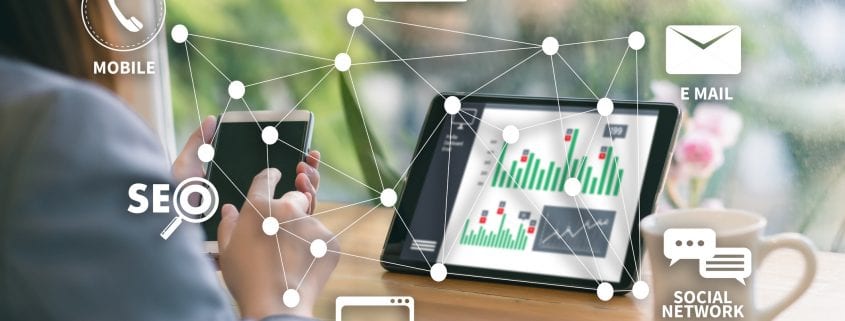
Types of Digital Marketing Strategies Your Business Should Use
Having a website is an important part of establishing your business online, but a website alone may not be enough to attract customers and generate meaningful results.
Search engine optimization (SEO) can help potential customers discover your business, but it is only one part of a successful digital marketing approach.
There are several types of digital marketing strategies businesses can use to increase brand awareness, reach relevant audiences, and turn website visitors into qualified leads.
These include SEO, paid advertising, social media, content marketing, email marketing, and other digital methods that support different stages of the customer journey.
Understanding how these strategies work together can help businesses build a more effective marketing program rather than relying on individual tactics.
What Are the Different Types of Digital Marketing Strategies?
Digital marketing strategies are planned approaches businesses use to promote products or services, engage target audiences, and achieve marketing goals through online channels.
The most common types of digital marketing include search engine optimization, pay-per-click advertising, content marketing, social media, email marketing, video marketing, display advertising, marketing automation, and conversion rate optimization.
Each strategy serves a different purpose.
Some help prospective customers discover your business, while others build credibility, encourage engagement, or support purchasing decisions.
The following nine digital marketing methods can help businesses develop a more complete online marketing approach.
1. Search Engine Optimization (SEO)
Search engine optimization helps improve a website’s visibility in organic search results.
When potential customers search for relevant products, services, or industry information, SEO helps search engines discover and understand useful website content.
An effective SEO strategy includes:
- Keyword research based on customer search intent.
- Helpful website and blog content.
- Clear page titles and headings.
- Technical website optimization.
- Internal linking between relevant pages.
- Mobile-friendly website experiences.
- Monitoring organic traffic and conversions.
For example, a manufacturing company might create technical articles addressing common engineering questions and link those resources to relevant product pages.
A senior living community might optimize its location and service pages to help families find information about available care options.
SEO can support long-term visibility, but results require ongoing monitoring and improvement.
Best for: Businesses seeking sustainable organic traffic and qualified visitors researching relevant solutions.
2. Pay-Per-Click (PPC) Advertising
Pay-per-click advertising allows businesses to reach audiences through paid search and other advertising platforms.
In a typical PPC campaign, advertisers pay when someone clicks their advertisement.
Google Ads is a widely used platform for search advertising, although advertising costs and pricing models vary by campaign type and platform.
Modern PPC campaigns involve more than simply bidding on keywords.
Advertisers must also consider search intent, audience targeting, ad relevance, landing page quality, campaign objectives, and conversion measurement.
For example, a homebuilder launching a residential community might use search advertising to reach people researching new construction homes in a specific market.
These advertisements can direct visitors to a community page where they can review available homes and request information.
PPC can generate targeted visibility relatively quickly, but performance depends on effective planning and optimization.
Best for: Businesses promoting specific services, generating inquiries, or reaching audiences with clear purchase intent.
3. Content Marketing
Content marketing focuses on creating useful information that addresses audience questions, challenges, and interests.
Instead of relying entirely on promotional messages, businesses can use content to educate potential customers and demonstrate expertise.
Common formats include:
- Educational blog articles.
- Product and service guides.
- Case studies.
- White papers.
- Infographics.
- Videos and webinars.
- Frequently asked questions.
For example, a B2B manufacturer might publish a guide explaining the differences between two production processes.
This information can help engineers or procurement professionals compare solutions before contacting a supplier.
Effective content marketing should also support broader business goals.
Articles can connect to relevant service pages, case studies, or consultation opportunities, creating a clear path from education to inquiry.
Best for: Businesses with complex products, longer buying cycles, or customers who need information before making decisions.
4. Social Media Marketing
Social media marketing helps businesses reach audiences, share content, participate in conversations, and build brand recognition.
However, effective social media marketing requires more than creating accounts on multiple platforms.
Businesses should identify where their target audiences spend time and which content formats are most relevant to them.
For example, LinkedIn may be useful for B2B organizations sharing industry insights and professional expertise.
Facebook and Instagram may support community engagement, visual storytelling, and consumer-focused campaigns, depending on the audience.
A social media strategy may include educational posts, videos, customer stories, industry updates, and paid promotions.
Engagement can also provide insights into customer interests and common questions.
Rather than measuring success through follower counts alone, businesses should evaluate relevant interactions, website visits, and qualified inquiries.
Best for: Brand awareness, customer engagement, content distribution, and relationship building.
5. Email Marketing and Lead Nurturing
Email marketing remains a valuable way to communicate with prospects and existing customers.
It allows businesses to share relevant information, promote resources, and maintain relationships throughout the customer journey.
Effective email marketing begins with understanding the audience and delivering content that matches their interests.
Common applications include:
- Welcome email sequences.
- Educational newsletters.
- Product and service updates.
- Event invitations.
- Lead nurturing campaigns.
- Customer retention communications.
For example, a prospective customer who downloads a technical guide may benefit from follow-up emails containing related resources or relevant application examples.
Businesses can use audience segmentation to make communications more useful.
Email performance should be evaluated through metrics such as clicks, conversions, unsubscribes, and qualified leads. Open rates can provide additional context but may be affected by email privacy features.
Best for: Nurturing leads, maintaining customer relationships, and supporting repeat engagement.
6. Video Marketing
Video marketing helps businesses communicate information through demonstrations, explanations, customer stories, and visual experiences.
Video can be particularly useful when products or services are difficult to explain through text alone.
For example, manufacturers can demonstrate equipment applications, while senior living communities can introduce staff and show community spaces.
Useful video formats include product demonstrations, educational videos, customer testimonials, virtual tours, and short-form social content.
Video should provide meaningful information rather than rely only on attractive visuals.
Captions, clear messaging, and mobile-friendly presentation can also improve accessibility.
When possible, place videos on relevant website pages alongside supporting information and calls to action.
Best for: Product education, storytelling, customer confidence, and engagement.
7. Display and Programmatic Advertising
Display advertising allows businesses to promote visual messages across websites, applications, and other digital environments.
Programmatic advertising uses technology to automate aspects of media buying and audience targeting.
These approaches can help businesses reach audiences beyond traditional search results.
For example, a B2B company might use display advertising to introduce its capabilities to professionals researching a particular industry.
Retargeting campaigns may also help reconnect with eligible visitors who previously interacted with the company’s website.
However, campaign effectiveness depends on audience quality, relevant messaging, appropriate frequency, and accurate measurement.
Businesses should also consider privacy requirements and available consent signals when using audience data.
Best for: Brand awareness, targeted reach, and supporting longer customer consideration cycles.
8. Marketing Automation and Personalization
Marketing automation helps businesses coordinate certain marketing activities using predefined workflows and customer information.
These activities may include email sequences, lead segmentation, inquiry routing, and follow-up communications.
For example, a company might use a customer relationship management (CRM) platform to identify when a prospect downloads a resource or requests information.
The marketing team can then provide appropriate follow-up content based on the prospect’s interests and actions.
Personalization should focus on delivering relevant information rather than making communications unnecessarily complex.
Automation also requires accurate customer data, appropriate permissions, and regular review.
For businesses managing many inquiries, automation can help support consistent communication and coordination between marketing and sales.
Best for: Lead nurturing, customer segmentation, and improving follow-up processes.
9. Conversion Rate Optimization (CRO)
Conversion rate optimization focuses on improving the percentage of website visitors who complete a meaningful action.
These actions might include requesting a quote, completing a contact form, scheduling a consultation, or downloading a resource.
Attracting visitors is important, but traffic has limited business value if potential customers cannot find the information they need or take the next step.
CRO activities may include:
- Improving landing page messaging.
- Simplifying inquiry forms.
- Making calls to action more visible.
- Improving mobile usability.
- Testing page layouts.
- Clarifying product or service benefits.
- Reviewing customer behavior and conversion paths.
For example, a company might receive steady traffic to a service page but relatively few inquiries.
By reviewing visitor behavior and simplifying the contact process, the business may identify opportunities to improve conversions.
Best for: Businesses seeking more qualified inquiries or sales opportunities from existing website traffic.
How to Choose the Right Digital Marketing Strategies
Not every business needs to use every marketing channel.
The most effective approach depends on your target audience, business objectives, budget, and customer decision-making process.
| Business Goal | Relevant Digital Marketing Strategies |
| Increase organic visibility | SEO and content marketing |
| Generate immediate qualified traffic | PPC advertising |
| Strengthen brand awareness | Social media, video, and display advertising |
| Educate potential customers | Content marketing and video |
| Nurture prospects | Email marketing and automation |
| Improve website inquiries | Conversion rate optimization |
| Support a longer sales cycle | SEO, content, email, and retargeting |
These digital marketing strategy examples show how different channels can contribute to specific goals.
For a manufacturer, SEO and technical content may attract buyers researching product requirements, while email nurturing helps maintain communication during a longer purchasing process.
A senior living community may combine local search visibility, video tours, and simplified inquiry forms to help families evaluate their options.
The right combination should reflect how customers discover, research, and choose your business.
Why an Integrated Digital Marketing Strategy Works Better
Individual digital marketing channels are often more useful when they support one another.
For example, SEO helps prospective customers discover informative content. Social media can introduce that content to additional audiences, while email marketing helps maintain communication with interested prospects.
Paid advertising can increase visibility for relevant offers, and conversion optimization can make it easier for visitors to take action.
An integrated strategy connects these activities around shared objectives.
Rather than treating each channel as a separate campaign, businesses can create a more consistent experience throughout the customer journey.
This is especially valuable for organizations with longer purchasing cycles or multiple decision-makers.
How to Measure Digital Marketing Performance
Effective digital marketing requires more than tracking impressions, clicks, or website traffic.
Businesses should evaluate how marketing activities contribute to qualified leads, customer engagement, and business outcomes.
Important metrics include:
| Metric | What It Measures |
| Organic traffic | Visits generated through unpaid search |
| Paid advertising conversions | Actions resulting from advertising campaigns |
| Cost per qualified lead | Marketing investment relative to relevant inquiries |
| Email conversion rate | Desired actions completed through email campaigns |
| Website conversion rate | Percentage of visitors completing meaningful actions |
| Lead-to-customer conversion | How effectively inquiries become customers |
| Marketing-attributed revenue | Revenue connected to measurable marketing interactions |
Google Analytics, advertising platforms, CRM systems, and campaign reporting can help businesses evaluate these results.
Because customers often interact with multiple channels before converting, avoid judging every strategy only by its last-click performance.
The goal is to identify which activities attract relevant audiences and help move them toward meaningful decisions.
Frequently Asked Questions About Digital Marketing Strategies
What are the main types of digital marketing?
The main types include SEO, PPC advertising, content marketing, social media marketing, email marketing, video marketing, display advertising, marketing automation, and conversion rate optimization.
Which digital marketing strategy is most effective?
There is no single strategy that works best for every business. The right approach depends on the target audience, customer journey, competition, budget, and business objectives.
How do digital marketing strategies work together?
Different channels support different customer needs. SEO and content marketing help customers discover information, paid advertising expands reach, email nurtures interest, and conversion optimization helps visitors take action.
What digital marketing strategies work best for B2B companies?
B2B businesses often benefit from SEO, educational content, targeted PPC advertising, LinkedIn marketing, email nurturing, and conversion-focused websites. The best mix depends on the buyers and sales cycle.
How can businesses measure digital marketing success?
Businesses can track qualified leads, conversion rates, cost per acquisition, customer engagement, and attributed revenue to understand whether marketing activities support business goals.
Build an Effective Digital Marketing Strategy With Stevens & Tate
Understanding the different types of digital marketing strategies is the first step toward building a stronger online presence.
The next step is choosing the right combination of marketing channels and connecting them to measurable business objectives.
Effective digital marketing strategies should help businesses reach relevant audiences, communicate their value, and create opportunities for qualified customer engagement.
Stevens & Tate Marketing helps organizations connect SEO, digital advertising, responsive website development, content marketing, email programming, and analytics within an integrated marketing approach.
Our work with Victor Technology is one example of how digital advertising, website development, and inbound marketing can be coordinated to reach business decision-makers.
Explore Stevens & Tate’s Digital Marketing Services to learn more about our capabilities and related client work.
Ready to strengthen your digital marketing performance?
Request a Marketing Consultation to discuss how Stevens & Tate can help your business attract qualified leads and support long-term growth.