
Why Customer Experience Is the New Marketing Strategy
In today’s saturated market, traditional marketing methods are no longer enough to capture and retain customer attention. Modern consumers expect more than catchy slogans or one-size-fits-all campaigns—they crave personalized, seamless, and memorable experiences across every touchpoint. That’s why forward-thinking brands are shifting their focus from messaging to experience. In other words: customer experience (CX) has become the new marketing strategy.
From Product to Experience
Not long ago, marketing was primarily about showcasing product features and outshouting the competition. But as Oracle explains, customer experience encompasses every interaction a consumer has with a brand—before, during, and after a purchase. It’s not just about making a sale; it’s about creating value at every step of the journey. (Oracle, What is CX?)
This shift is especially critical in industries where competitors offer similar products or services. In such cases, CX becomes a key differentiator. A faster checkout process, a helpful chatbot, or a personalized follow-up email can be the reason a customer returns—or walks away.
Why CX Drives Growth
Customer experience isn’t just about delight—it’s about driving measurable business results. According to the Forbes Communications Council, brands that embed CX into their marketing strategies see improved customer loyalty, increased retention, and stronger word-of-mouth. And with customer acquisition costs rising, those outcomes are more important than ever.
In fact, satisfied customers are 5x more likely to repurchase and 4x more likely to refer a friend. A well-crafted experience not only retains customers but also turns them into advocates, amplifying your marketing efforts organically.
Integrating CX Into Your Marketing Strategy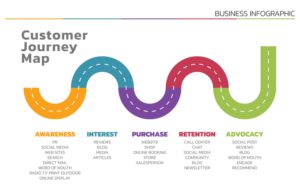
To effectively make CX the backbone of your marketing, consider the following steps:
- Map the Customer Journey: Understand your audience’s experience from the first touchpoint to post-purchase interactions. Identify pain points and opportunities to improve.
- Use Data to Personalize: Leverage customer data to tailor messages, content, and offers. Personalization creates relevance, and relevance builds trust.
- Break Down Silos: Align marketing with customer service, sales, and operations. A seamless experience requires internal collaboration.
- Listen and Adapt: Use customer feedback to refine messaging and improve products or services. CX is not static—it evolves with expectations.
Read More: How to Create Cohesive Customer Jouneys
CX Is the Future of Marketing
Customer experience isn’t a buzzword or a trend—it’s a strategic imperative. As brands strive to stay relevant and competitive, those that prioritize CX will be the ones that thrive. In a world where consumers have endless choices, the experience you deliver might just be your most powerful marketing asset.
Read More: How to Create A Seamless, Omnichannel CX

The landscape of the Internet is ever changing and Nicole has the energy and aptitude to keep Stevens & Tate Marketing out in front of the pack. She leads an enthusiastic team in strategic planning, development, search engine marketing, online promotions and advertising for the web.