thank you pages

A Thank You Page Isn’t An End, But A Continuation

A thank you page is where a website visitor is directed after downloading a content offer. The function of a thank you page (of course) is to thank that visitor for downloading the content from your landing page, but also to help them move through the Buyer’s Journey.

A thank you page shouldn’t just say “thanks for coming.” Saying thank you is important to be courteous and trustworthy, but you can use thank you pages to your advantage and lead visitors to discover more about your company. Here are some important practices to help make sure your thank you pages are as effective as possible.

Read more

Speaking Event

RECAP: FABTECH 2016

WHO: Suppliers, manufacturers, distributors, and professionals in the metal forming, fabricating, welding and finishing industries—more than 1,500 vendors and 40,000 attendees from around the country.

WHERE: Las Vegas Convention Center in Las Vegas, Nevada

WHEN: November 16-18th, 2016fabtech 2016
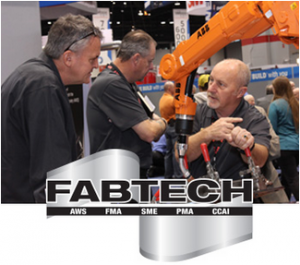
DETAILS: FABTECH is North America’s largest Metal Forming, Fabricating, Welding and Finishing event. Stevens and Tate Marketing has two speakers featured at this year’s show.

The speakers at Stevens & Tate are thrilled to be sharing their collective B2B marketing expertise gained from decades of industry experience, at the Nation’s largest event of its kind. This is the third year in a row that Internet Director Nicole Wagner has been selected to speak at this prominent event, and it will be the second year for President Dan Gartlan.

At the show, the pair will both be presenting educational sessions on Friday, November 18th. The goal is to help business leaders and industry professionals learn new ways to get more out of the initiatives they have in place, to stay ahead of changing trends, and to stand out in a crowded marketplace.

Wagner’s “Enhance Your Online Presence and Drive Success Through Your Website and Social Media” will take place from 11:00-11:30am. Gartlan’s “Actionable Strategies Proven to Improve Marketing Results” will follow from 12:00-12:30pm.

Gartlan’s highly informative session is based on his highly requested Attraction Marketing program, designed to help educate attendees on key tactics and initiatives that work together to create positive impact in their marketing programs and on business success. Additionally, it explores effective ways to monitor and adjust initiatives by setting measurable objectives and tracking future indicators and results.

Wagner will be presenting an updated version of her program from last year, with essential strategies that manufacturers can incorporate to maximize the impact of their online efforts. Focus is on how website optimization, search engine marketing and social media work hand-in-hand and how various techniques can create efficiencies and improve performance. A reputable trait of these educational sessions is the emphasis on providing relevant and actionable takeaways that are targeted to each audience—which is one reason they continue to be so well received by organizations of every size and scope around the country.

FABTECH is North America’s Largest Metal Forming, Fabricating, Welding, and Finishing Event—bringing together an anticipated 40,000 professionals and 1,500 exhibiting companies to network, learn and discover new solutions for success. For four days, November 9-12, 2015, attendees can meet with world-class suppliers, participate in over 100 educational sessions and expert-led presentations, and explore the latest innovations in technology, products and industry developments.

To learn more about FABTECH 2016, see a list of exhibitors, register to attend, and get full details about the show, click here.

———————————
 

Speaking Event

RECAP: PMA Manufacturing Sales Summit


WHO: Sales and marketing professionals from around the world

Manufacturing Sales SummitWHERE: The Conrad Indianapolis Hotel in Indianapolis, IN

WHEN: September 27-28th, 2016

DETAILS: Stevens & Tate will join hundreds of sales and marketing professionals in the manufacturing industry for a featured speaking session. Read more

Speaking Event

RECAP: 2016 LeadingAge Missouri Annual Conference for Senior Living Professionals


WHO: Healthcare and senior living professionals from around the world

WHO: LeadingAge Missouri members and affiliates—part of a national association of 6,000 not-for-profit organizations dedicated to expanding the world of possibilities for aging care 

WHERE: Chase Park Plaza Hotel in St. Louis, Missouri LeadingAge Missouri

WHEN: September 12-14, 2016

DETAILS: Stevens & Tate will join thousands of senior living professionals from around the region for a featured speaking session. Read more

Speaking Event

COMING UP: 2016 LeadingAge Tennessee Annual Conference for Senior Living Professionals


WHO: Healthcare and senior living professionals from around the world

WHO: LeadingAge Tennessee members and affiliates—part of a national association of 6,000 not-for-profit organizations dedicated to expanding the world of possibilities for aging care 

WHERE: Franklin Marriot Cool Springs in Franklin, TNLeading Age Tennessee

WHEN: August 8-10, 2016

DETAILS: Stevens & Tate will join thousands of senior living professionals from around the region for a featured speaking session. Read more

elicit your prospect's business story

How To Elicit Your Prospect’s Business Story

Business Storytelling Versus Recital Storytelling

Much has been written about storytelling as a business tool. And for good reason. Storytelling can be an extremely powerful way to influence, motivate and inspire others. However, it is common for storytelling trainers to err by disregarding differences between business storytelling and recital storytelling.

Stylistically, business storytelling should be more casual than careful.  Indeed, like recital storytelling, business storytelling is used to engage listeners, facilitate interest, and gain emotional reactions. However, when telling a story in a business setting, you should not try to become the next Mark Twain. As a business tool, storytelling should be more  “informance” than performance.  Otherwise, it will do more harm than good.

Storytelling as a Two-Way Business Tool

There are other differences, as well. For instance, recital storytelling travels from the speaker’s mouth to the listener’s ears.  By contrast, in a business setting,  storytelling can and should be a two-way street.  In fact, one can benefit as much from eliciting as they can from telling stories.

Asking Questions That Elicit a Prospect’s Story

Consider, for instance, the salesperson interviewing a prospect who is considering a change in vendors. Typical questions that the salesperson might ask are, “Why are you considering a change in vendors?” or “What are you looking for that you are not receiving from your current supplier?” Using questions like these will likely yield a direct answer and provide some understanding of what the prospect is looking for.  However, by eliciting a story, additional insights can be gained.

How Stories Reveal Deeper Emotional Insights

Instead of asking for reasons why, consider what would happen with quesitons like, ” When did you decide to change vendors?” or “ What happened to cause you to reconsider your current arrangement?”  By asking for the event or events leading up to the reason,  a story would be elicited.  And, instead of receiving a direct answer like, “We are looking for someone who can provide faster responses to our requests,” it’s more likely that prospect would say something like,”When we first started working with them they were Johnny-on-the-spot.  But now it takes 5 or 6 phone calls before anyone gets back to us. Last  year, they were acquired by a bigger company.  And following that acquisition, we got lost in the shuffle.  Being one of their smaller accounts, we just didn’t seem as important anymore.”   As the story unfolds, the emotional component of the problem rises to the surface. Besides the directly stated more rational reason why behind the considered switch, we also learn that the prospect has been feeling left out in the cold and wants to feel important regardless of the size of his business.

Five Ways to Elicit Better Business Stories

This is but one example of how eliciting stories can be more helpful than just the fact gathering. It takes some practice.  But here are some things to consider when developing your ability to elicit stories:

  1. Go for the “time stamp.”   Stories, by definition describe events that occurred at one time or another.   Be mindful of this as you ask questions.  Always ask for the “when” or  “what happened” instead of asking for a direct reason why.
  2. Learn about the setting.    When describing where something happened, you are likely to elicit a story, as well.  i.e “where did the process start falling apart?” or  “where did you first start to see changes occur?”
  3. Avoid “why” questions if you can.  Certainly knowing why someone believes the way they do is important.  But, again, “why,” more often than not, will yield opinions or theories that are often rational in natural.  Stories generally reveal the emotions that underly the facts.
  4. Be aware of assertion or opinion cues.  Whenever someone says or implies what they think, you should know you are not being told a story.
  5. If you get an assertion, go for the underlying story.   Instead of asking, “why do you believe that to be true?” ask, “Did something occur to cause you to feel that way?”   This will inevitably yield far more useful information than the assertion alone. Just remember, a story is not a story unless an event is described.

Learn more about brand storytelling here!

marketing strategy for success