
benefits of seo

Benefits of SEO: How Optimizing Your Website Will Lead To Greater Results in 2017

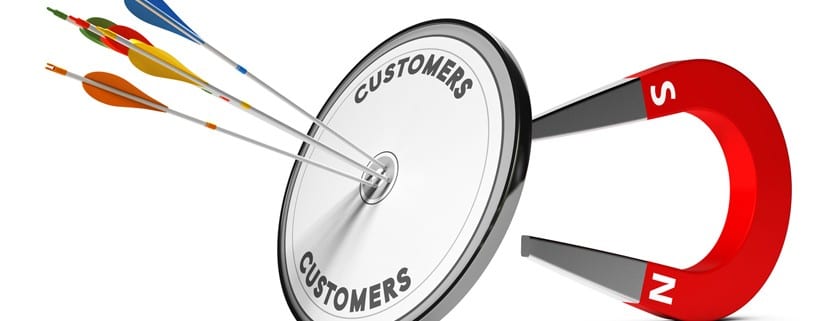
By now, most marketers recognize that SEO is an important part of doing business online. To put it simply, if your website isn’t properly optimized, you are missing out. There are many reasons why you should start an SEO program if you haven’t already. SEO is a part of attraction marketing. Here are six of the top benefits of SEO.

More Website Traffic

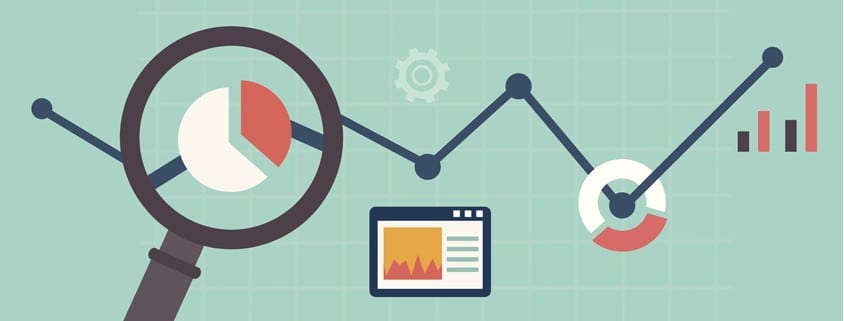
Top positions in the search engines result pages lead to a lot more clicks, so ranking near the top can significantly increase the traffic coming to your website. According to research from Advanced Web Ranking, the top search result gets 30.1 percent of the clicks and over 50 percent of the clicks go to the top three results. Read more

generate more leads

Learn To Generate More Leads With Hubspot’s State of Inbound 2016 Report

Converting visitors into leads is the biggest challenge for marketers, according to HubSpot’s State of Inbound 2016 report. With 78 percent of marketers saying generating leads is their top challenge, the competition is

Here are a few key lead generation strategies based on the data found in HubSpot’s State of Inbound 2016 report. Read more

Creating A Brand To Become President

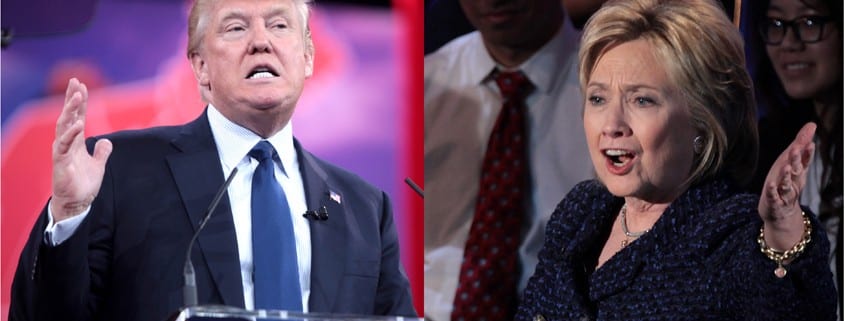
Whether you are a fan of politics or prefer to stay on the side lines, the race for the presidency has always been about strategy and timing. This election has broken many barriers, but one thing for certain is that both candidates have established a presidential brand. Read more

food packaging design

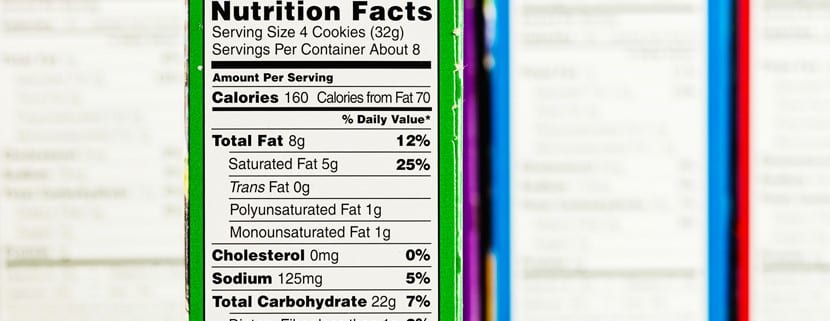
FDA Nutrition Label Changes Impact Food Packaging Design

On May 20th, 2016 the U.S Food and Drug Administration (FDA) issued new rules for nutrition labels and packaged foods. So how does this affect private label packaging or food packaging design in general? It’s been 20 years since any major revision has been made and to my assessment, a much needed one.

The purpose of this blog is to discuss the design only and not the new laws that revolve around the change including new line items and removal of some items.

Read more

Delight Your Customers

How Can You Delight Your Customers?

How do big-name brands like Coca-Cola and Disney retain their customers after their first sales interaction? They continuously delight their customers with their products and services, and aa a result, develop a strong relationship with those customers.

So what does it mean to “delight” consumers? The “delight” phase of the Inbound Marketing Methodology is all about pleasing your customers so that they benefit from your company and remain a customer and promoters of your brand. Read on to find out how you can delight your customers:

Read more

thank you pages

A Thank You Page Isn’t An End, But A Continuation

A thank you page is where a website visitor is directed after downloading a content offer. The function of a thank you page (of course) is to thank that visitor for downloading the content from your landing page, but also to help them move through the Buyer’s Journey.

A thank you page shouldn’t just say “thanks for coming.” Saying thank you is important to be courteous and trustworthy, but you can use thank you pages to your advantage and lead visitors to discover more about your company. Here are some important practices to help make sure your thank you pages are as effective as possible.

Read more

elicit your prospect's business story

How To Elicit Your Prospect’s Business Story

Business Storytelling Versus Recital Storytelling

Much has been written about storytelling as a business tool. And for good reason. Storytelling can be an extremely powerful way to influence, motivate and inspire others. However, it is common for storytelling trainers to err by disregarding differences between business storytelling and recital storytelling.

Stylistically, business storytelling should be more casual than careful.  Indeed, like recital storytelling, business storytelling is used to engage listeners, facilitate interest, and gain emotional reactions. However, when telling a story in a business setting, you should not try to become the next Mark Twain. As a business tool, storytelling should be more  “informance” than performance.  Otherwise, it will do more harm than good.

Storytelling as a Two-Way Business Tool

There are other differences, as well. For instance, recital storytelling travels from the speaker’s mouth to the listener’s ears.  By contrast, in a business setting,  storytelling can and should be a two-way street.  In fact, one can benefit as much from eliciting as they can from telling stories.

Asking Questions That Elicit a Prospect’s Story

Consider, for instance, the salesperson interviewing a prospect who is considering a change in vendors. Typical questions that the salesperson might ask are, “Why are you considering a change in vendors?” or “What are you looking for that you are not receiving from your current supplier?” Using questions like these will likely yield a direct answer and provide some understanding of what the prospect is looking for.  However, by eliciting a story, additional insights can be gained.

How Stories Reveal Deeper Emotional Insights

Instead of asking for reasons why, consider what would happen with quesitons like, ” When did you decide to change vendors?” or “ What happened to cause you to reconsider your current arrangement?”  By asking for the event or events leading up to the reason,  a story would be elicited.  And, instead of receiving a direct answer like, “We are looking for someone who can provide faster responses to our requests,” it’s more likely that prospect would say something like,”When we first started working with them they were Johnny-on-the-spot.  But now it takes 5 or 6 phone calls before anyone gets back to us. Last  year, they were acquired by a bigger company.  And following that acquisition, we got lost in the shuffle.  Being one of their smaller accounts, we just didn’t seem as important anymore.”   As the story unfolds, the emotional component of the problem rises to the surface. Besides the directly stated more rational reason why behind the considered switch, we also learn that the prospect has been feeling left out in the cold and wants to feel important regardless of the size of his business.

Five Ways to Elicit Better Business Stories

This is but one example of how eliciting stories can be more helpful than just the fact gathering. It takes some practice.  But here are some things to consider when developing your ability to elicit stories:

  1. Go for the “time stamp.”   Stories, by definition describe events that occurred at one time or another.   Be mindful of this as you ask questions.  Always ask for the “when” or  “what happened” instead of asking for a direct reason why.
  2. Learn about the setting.    When describing where something happened, you are likely to elicit a story, as well.  i.e “where did the process start falling apart?” or  “where did you first start to see changes occur?”
  3. Avoid “why” questions if you can.  Certainly knowing why someone believes the way they do is important.  But, again, “why,” more often than not, will yield opinions or theories that are often rational in natural.  Stories generally reveal the emotions that underly the facts.
  4. Be aware of assertion or opinion cues.  Whenever someone says or implies what they think, you should know you are not being told a story.
  5. If you get an assertion, go for the underlying story.   Instead of asking, “why do you believe that to be true?” ask, “Did something occur to cause you to feel that way?”   This will inevitably yield far more useful information than the assertion alone. Just remember, a story is not a story unless an event is described.

Learn more about brand storytelling here!

marketing strategy for success

website redesign checklist

Website Redesign Checklist For 2016

Your website is not just an accessory, it is an extension of your brand. For the best results, websites constantly need to be adjusted, added to, and improved upon, based on trends, consumer behavior, and website performance. Here is a six-step website redesign checklist to help you make sure your website is ready to be competitive and work for your brand in 2016. Read more

McDonald’s Revolution in Retail Marketing

As I was traveling recently through St. Joseph, Mo last week, I stopped to get some gas and near the station was a McDonalds. I haven’t been in a McDonalds for about a year and decided to order my lunch. I wanted to stretch my legs, so I walked into, what I would consider to be the future. 

I was greeted with a digital Kiosk board. Actually three of them. And all it said was “Create your taste”. I could create my own burger, with ten additional sauces, avocado, tortilla strips, three cheeses, grilled or raw onion and the list goes on-even lettuce wraps. You see, I walked into the very first 6,500 square feet McDonalds offering you to create your own burger. Also looking around I saw televisions, armchairs and couches.

As I moved my hand around, I created my own burger. Once paid on the kiosk, I was asked by someone standing by me to take a seat. Huh? McDonalds is going to deliver to my table? I was given an electronic device that linked my order to my table.

Read more

Brand Story

Story vs. Assertion: Which Is Better For Your Brand?

One of the first things we do in our Business Storytelling Workshops is give respondents a mini-quiz to see if they can tell the difference between a story and an assertion. It is rare indeed when anyone gets all or even most of the answers correct. Albeit a common mistake, I’d like to show you why this mistake can have negative consequences for your company and, by extension, its brand.

First, and especially in a business setting, assertions and stories are tools used to make a point. The difference is in how the point gets made. An assertion makes the point through a statement of opinion or belief. A story makes the point through the description of an event that has already happened or will happen sometime in the future.

Consider these two examples:

First the assertion:

“Introducing New Coke was an egregious error in judgement made by negligent management. They should have taken into consideration that emotional bonds people have with brands can be very strong.”

Personally, upon hearing this at a meeting I once attended, I was turned off by the speaker. Based on my studying the New Coke failure, I thought that referring to the failure as “an egregious error in judgment” was an ill-informed oversimplification. Additionally, I didn’t like the insinuation that knowing about the strength of any brand’s emotional attachment should just be thought of as common sense.

You may disagree with the reasons for my strong reaction. That’s not the point. The point is that assertions always present the risk of disagreement. To assume that everyone is going to agree with you can backfire. Especially when the risk of disagreement is high, it is better to rely on a story leading up to your point.

Contrast the above assertion with this story used to make a point:

When Coke saw that New Coke performed better in taste tests than the current Coke, they confidently introduced it with a great deal of fanfare. Yet, Coke drinkers didn’t just reject New Coke. They revolted against it. They told Coke it was destroying something they had grown up with. Can you imagine how baffled Coke must have been when they found this out? Clearly, this points to the strength of the emotional bond that consumers can have with a brand.  It can be so strong that it outweighs rational considerations given to taste or other attributes.

And yes, it took a little longer to get to the point.

However, when the point is made about the emotional power of brands, it gets served up as an assertion that is inescapable.  This is one of the reasons it has been said that stories persuade without getting in their own way.

Learn How Story Branding Can Help Your Marketing Strategy

The challenge and how to meet it:

Again, the challenge is to become aware of whether you are asserting something or telling a story.  Stories come in a number of different forms. But if you were to take any story apart, you would generally find these elements:

Time markings:  Stories imply or directly state that something happened in time. eg. In 2001…,” “Just the other day” “Last Tuesday …” “When we last spoke to the CEO …” The archetypal time marking is, of course, “Once upon a time” but that’s not one you want to use in a business setting.

Place markings:  Just stories imply or state that something happened in time, the same is true for place. eg.“We were outside his office …” “At the basketball tournament…” However, sometimes the place is nondescript. “Our representative met with their President, ” could suggest that a meeting took place at the  President’s office or possibly by telephone.  Either way, the meeting occurred at a place.

Characters: Stories:  Stories feature a “personified it.” eg.  Besides being a person, the “personified it” could be a company, an animal – anything that performs an action. “The brand died an ignominious death.”, “The tree lost its leaves early this Fall.”.

Events:  The biggest signal that a story is being told is when an event is described as in all of the examples above.

Click here to learn all there is to know about telling your brand’s story.