

email marketing metrics

Interactive Email Marketing Trends

With increasing competition in the online marketing world, it is becoming essential for businesses to innovate creative ways to appeal to customers via email. Learn some of the newest interactive email marketing trends to take advantage of.

As opposed to traditional emails that would only contain plain text and occasional attachments, interactive emails are packed with exciting add-ons to appeal to their customers. Below are characteristics as well as advantages of using interactive email marketing trends for your business.

Interactive Email Marketing Trends

Let’s have a look at how we should create interactive email which is in trend:

Increased Compatibility with Google

Google announced compatibility with the media query for their email clients across all devices. This compatibility now allows email developers to include complex email designs without having to sacrifice certain components in order to ensure compatibility.

With the all-new support for media query, developers are now unlimited in their ability to incorporate complex media into emails. Google has also optimized email layouts for viewing between mobile devices and desktop computers.

Animated GIFs

An animated GIF is a combination of static images, containing multiple frames in succession, to create an animated image. It achieves video effect while occupying only slightly more space than a regular image.

These interesting animations can be designed to convey important information about your business. They can also convey information like sales discounts, new product launches, etc.

animated gif.gif

Providing a framework for menu options within emails can allow your customers to quickly navigate through various products or service categories right within the email. This allows you to conveniently present your customers with several options to choose from before they can begin to load new web pages to get to your site.

If you are providing news, customers can quickly scroll through various news categories and see what interests them before they can read further. Travel companies can also offer various packages right within the email for their customers to sieve through.

Princess Cruises Slider-1.png

Integrated Forms

Integrated forms are a highly effective tool for businesses who want to streamline the process of gathering valuable customer information. You should embed the form within the email rather than having the reader link to a new page. Whether it be in the form of a survey or a questionnaire, integrated forms offer a seamless experience within the email itself.

This allows customers to answer questions or make their selections right within the body of the email. There are templates that integrate check-boxes, text boxes for open-ended questions and radio buttons for closed-ended questions.

6 Email Marketing Tips

Rotational Banners

Emails that contain a lot of information can present it in a clean and catchy manner by using rotational banners. These interactive elements allow consumers to flip through multiple images, each with a separate message embedded within.

Rotating banners are perfect for tour and travel companies that are showcasing various packages. Financial institutions like banks that are advertising credit card options or different types of bank accounts can also use this feature. News snippets of various trending stories can also be laid out in rotating banners by news and media outlets.
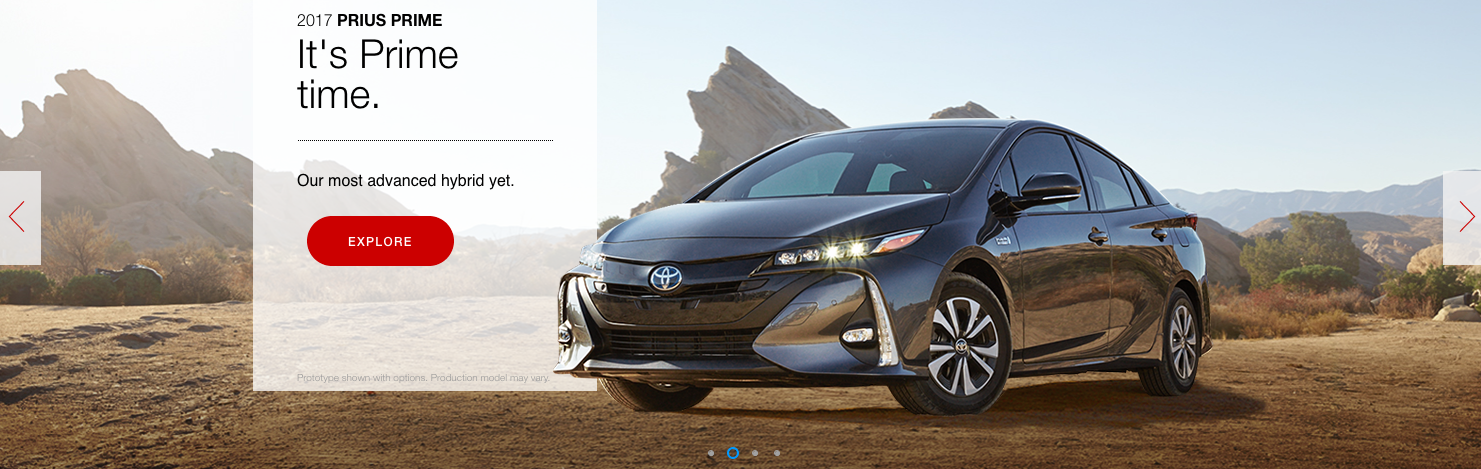
rotational banner toyota.png


Sliders

Sliders can be used to display multiple products within the email at the same time. This allows customers to make comparisons. It also allows customers to access information on multiple products without having to click on their inbox.

Sliders are perfect for companies that launch different variations of the same product and would like information on the various versions to be readily available to the customer. They are also helpful for those sellers who would wish to include a combination of pictures, product specifications and product reviews right within the email.

There are also brand new interactive email designs that are slowly growing in popularity but still pretty new to most email users. These include key frame animation (smoother animations and frame changes than GIFS, with effects such as linear and parallel movement, and hover effects), cinemagraph (using GIFS to create cinematic video-like effects), and compatibility with 2k and 4k resolutions (which includes lack of width limitation and a resolution of higher than 600 pixels).

In conclusion, interactive emails are the future of email marketing. It is important for businesses to stay up to speed with new email marketing trends that they can incorporate into their future marketing strategies. The numerous advantages of interactive emails, as discussed here, continue to make them an online marketing necessity.
email marketing program

long form video1

6 Reasons You Should Leverage Long Form Video Marketing

Video marketing has long been accepted as one of the most effective forms of content marketing. Video content is easy for people to consume on any device. It’s also arguably the best way to deliver a message in an engaging way and to establish an emotional connection. However, there’s been a misconception that short-form video content is the best way to go. After all, people generally have shorter attention spans these days. Not to mention that many social platforms, such as Snapchat and TikTok, encourage shorter video content. Yet there should also be a place for long-form video content in your video marketing strategy.

Let’s understand first what is long for video content?

Long-form video content offers a deeper and more extensive exploration of the topic, providing a comprehensive understanding of the subject matter.

watch video video marketing

6 Reasons To Leverage Long Form Video Marketing

The following are six reasons why you should be using long-form video marketing:

1. Deliver More Value

There’s very little time to provide useful information to viewers in a 30-second to two-minute clip. You basically have just enough time to deliver a simple message. As such, there’s not a whole lot of value in short-form videos. The only thing you can really achieve is to generate brand awareness. Long-form videos are much more effective when it comes to trying to provide value to your audience. For example, it’s difficult to create a how-to video that’s less than a couple minutes long. However, you can create a detailed, step-by-step how-to video in the long-form format.

2. Create A More Engaging Experience

Although more short-form videos are consumed than long-form videos, long-form videos drive more engagement. A video marketing study published in 2017 revealed that although 80 percent of videos are under five minutes, those videos drove less than 33 percent of overall video engagement. On top of that, 8 percent of the videos that were over 15 minutes long drove half of all audience engagement.  As long as the quality of your video content is high, a long-form video is going to be more engaging. After all, it’s going to keep viewers on your site (or social channel) much longer than a 30-second video would. Not to mention that the actual content you’re delivering will be more engaging since you’re able to provide more information that’s useful to your audience.

MAXIMIZING YOUR MARKETING BUDGET

3. Improve Your SEO

Short-form videos may get shares on social media, especially if they go viral due to their humor. However, short-form videos don’t tend to earn many backlinks. Websites are more likely to link back to your videos if they provide exceptional value, which they are more likely to do if they are on the longer side. By earning more backlinks, your long-form videos will help boost your SEO.

Similar Article: Six Types of Real Estate Video Marketing Ideas For Homebuilders

4. YouTube Favors Longer Videos

YouTube is the major video platform. Not only is it the top video hosting platform, but it’s also the second biggest search engine behind Google as well as a social media platform in itself. Long-form videos do much better on YouTube than short-form videos. There’s a reason for this: YouTube’s algorithm is built around favoring long-form content. The reason why they built their algorithm this way is that longer videos allow more room for ads. Videos have to be at least 10 minutes long before ads can be run in the middle of the video, which is why many YouTube creators do everything they can to reach that 10-minute mark.

5. Build Your Brand Authoritylong form video social media

While shorter videos may get more views, they don’t generally help much in the way of building your brand authority. This is simply because shorter videos are limited in the amount of useful information they can convey. BY creating long-form videos, you can go into way more depth about a subject. The more in-depth your video subject matter is, the more you’ll be able to showcase your authority. This will help to boost your brand’s authority within your industry, which can help to build more brand trust as a direct result.

5 Types Of Marketing Videos You Should Think About Using

6. Convert More Leads

Building your brand authority is certainly going to play a part in converting leads. When viewers develop trust in your brand by watching your long-form videos, they’ll be more willing to convert. However, this isn’t the only reason why long-form videos convert more than short-form videos. The people who are watching long-form videos tend to be near the bottom of the sales funnel, while people who are watching short-form videos are probably still near the top of the funnel. As such, many long-form video viewers are already ready to convert.

Shorter videos are a good way to generate more brand awareness. However, long-form video content tends to be much more effective overall when it comes to nurturing leads and building brand authority and trust. As such, you should make sure to implement a long-form video content strategy if you haven’t done so already.

How To Nurture Your Leads With Email Marketing

How To Nurture Your Leads With Email Marketing

Despite some claims that email is dead, it is still a highly effective way for marketers to connect with consumers. It is an integral part of inbound marketing as well as attraction marketing, and is a great way to send nurture leads throughout the buying process.

Nurture Your Leads With Email Marketing

What is Lead Nurturing?

Lead nurturing is a strategic approach in marketing and sales that focuses on developing and maintaining meaningful relationships with potential customers throughout their buying journey.

Here are a few email best practices that will help nurture your leads.

Segmentation

The segmentation of your contacts database will help define your audience into categories. If you are unfamiliar with buyer personas, read about them here, as they will be extremely useful in segmenting your contacts. Segmenting be done in terms of geographic location, company type, role within that company, behavior, marketing intelligence, or any other category that could be valuable to your company. Use segmenting to your advantage by targeting those different groups with useful content based on their specific needs.

Read more

50 Most Powerful Call-to-Action Phrases

Are you looking to increase your conversion rate? Call-to-Actions are an essential part of the conversion process, but what kinds of Call-to-Actions should you put on your website? CTAs should be simple yet effective, and should catch the attention of your visitors. The formula for a successful CTA page title consists of combining such sales buzzwords as “free,” “discount,” “offer,” “gift,” “guarantee,” with action-oriented words like “click,” “download,” “request,” and “send.” Listed below are 50 powerful Call-to-Action phrases that visitors can’t resist clicking on.

50 Powerful Call-to-Action Phrases

  1. Download now
  2. Click here
  3. Join now
  4. Download here
  5. Start now
  6. Click here for details
  7. I urge you to…
  8. Get a free…
  9. Talk to an expert
  10. Immediate download
  11. While supplies last
  12. Money back guarantee
  13. Money back guarantee, no questions asked
  14. Get it now!
  15. Act quickly
  16. Free shipping
  17. Shipping discount
  18. Come in for a free consultation
  19. Come see us today
  20. Reserve your spot now
  21. Come in today
  22. Start your trial
  23. Start your free trial
  24. Offer expires…
  25. Satisfaction guaranteed
  26. We’d like to hear from you
  27. I can’t wait to hear from you
  28. Limited availability
  29. Limited time offer
  30. Best value
  31. For more details call…
  32. Please don’t hesitate to call
  33. We’re waiting for your call!
  34. Send for our free brochure
  35. Send for our free catalog
  36. Subscribe to our email list
  37. Subscribe to our newsletter
  38. Send in your application today!
  39. Apply here
  40. Order now and receive a free gift
  41. Tell us what you think
  42. Take our quiz!
  43. Sign up online at…
  44. Get started today
  45. Request your FREE quote today
  46. Just reach for your phone
  47. Members only/Subscribers only
  48. Contact us
  49. It’s important that you respond promptly
  50. Download our eBook for more information

Click here to learn more about powerful CTA phrases that increase clicks!

Now that you know what attention-grabbing Call-to-Actions look like, you can implement your own. Don’t just copy and paste the CTA phrases from the list above. Tweak the CTA phrases so that they apply specifically to your company and your products and/or services. For example, instead of just saying, “Start your free trial,” you can say “Start your free trial with (insert company name here) so your CTA is more personalized. Use these phrases/Quotes as a template for your website’s CTAs, sit back, and watch the clicks roll in!

25 Website Must Haves
lead nurturing

Soft Sell Advertising: What it is, Why it works, and How to Execute

When it comes to advertising, businesses as a whole tend to be aggressive. They let you know exactly who they are, what they do, and why you should buy from them. Even in inbound marketing, companies will try to tie the topic of conversation in with their products or services in some way. However, this isn’t the only course of action. You can also reach your target audience and successfully engage them by advertising in a more subtle manner. Such a strategy is known as soft-sell advertising.

What Is Soft-Sell Advertising?

Soft-sell advertising is a more subtle form of advertising. The goal behind soft-sell advertising is to evoke a positive emotional response. The idea is that the customer will then subconsciously connect the response they had to the brand that invoked it. Businesses that implement soft-selling marketing will often create ads that are warm or humorous, as these tend to be the ads that invoke the most positive feelings.

The History of Soft-Selling

The idea of soft-selling first emerged in 1914, when Theodore MacManus published an ad that would become the model for the soft-sell. The ad was essentially an essay on the burden of being the best in one’s field. The ad was for Cadillac, yet Cadillac wasn’t mentioned a single time. Nor was there an illustration that ran with the ad. Yet the ad was incredibly successful.

30 Greatest Lead Generation Tips

The Benefits Of Soft-Sell Advertising

The following are some of the reasons why you should incorporate soft-selling advertising into your marketing strategy:

  • Less pressure on customers – Because soft-sell ads don’t push products or services, customers will feel less pressure to buy. The pressure is apparent in hard-sell ads, and it’s often off-putting. Using soft-selling ads, you give your audience the ability to discover your brand and make a purchasing decision on their own time.
  • Increase brand awareness – Even though you’re not pushing your brand into their faces, audiences will be more likely to share your content. The reason? People don’t share ads, they share content. When you create a soft-sell ad, you have to focus on the quality of the content and not on the sale. If you are able to create high-quality content that invokes a positive emotion, your audience will share that content. People will share content that elicits a positive reaction to their friends, thereby increasing your brand awareness.
  • Build more trust – Another result of having to focus on content quality is that you’ll build more trust. You’re basically offering your audience something of quality without asking for something in return. This shows them that you care about more than just sales. As a result, they’ll be more likely to explore your brand further. Not to mention that building trust is essential to building long-lasting relationships.

Examples of Soft Sell Advertising

Soft sell advertising has grown in popularity, both in regards to inbound marketing and outbound marketing. The following are a few examples of effective soft-selling ads:

  • Yeti – Yeti is a company that sells coolers and outdoor accessories. They filmed an entire series of videos called Hungry Life showing a well-known chef spending time in nature, where he picks plants, goes fishing, and prepares his meals outdoors. Although Yeti’s coolers do make an appearance, they are never showcased or talked about. Yeti is obviously targeting a specific audience by showcasing a specific lifestyle. That audience will then make an emotional connection between that lifestyle and the Yeti brand.
  • Burt’s Bees – Burt’s Bees uses their founder as the spokesperson. This is perfect because he essentially represents their main buyer persona. The Nature of Burt video introduces Burt, who explains who he is. He’s likable and funny, and their target audience can relate to him. What makes the video so effective is that it builds an emotional connection between the viewer and Burt, all without ever promoting the brand or its products.

Implement a Soft-Sell Advertising Strategy Today

Because many companies focus many of their marketing efforts on generating brand awareness, they tend to be overly aggressive. However, soft-sell marketing can be incredibly effective in terms of engaging your audience and building trust. As such, you should be sure to include soft-sell marketing tactics in your inbound marketing strategy.

social media marketing
b2b email marketing

Exploring The Differences Between B2C and B2B Email Marketing

How you market your brand depends greatly on who your audience is, which is why b2c (business to consumer) and b2b (business to business) marketing are very different strategies. As such, your email marketing strategy is going to depend heavily on whether or not you’re marketing b2b or b2c. The following are some of the differences between b2c and b2b email marketing to keep in mind:

Optimal Send Time

Knowing when to send your emails has a big impact on whether or not they’re opened. B2c customers are more likely to check their emails in the evenings or on the weekends since they are busy working during the day. B2b recipients are more likely to open them during work hours since they often check their work email regularly throughout the day.

Spam Filters

Spam filters work a bit differently with b2b and b2c customers. B2b customers often use filters that check for certain keywords before deciding whether to inbox the email or automatically sort it into the junk folder. With b2c customers, it’s more about building a good sending reputation with minimal complaints.

Personalization And Segmentation

While personalization and segmentation are important for both, they’re a bit different. With b2c customers, you’ll want to personalize products and content based on individual taste. With b2b customers, personalization should be a bit more subtle, such as by highlighting new stories within their industry or providing case studies that match their needs.

How Customers Respond

B2b customers buy from people, whereas b2c customers buy from brands. This means that when you send emails to b2b customers, you should expect a potential reply. Make sure that you include contact information, such as a phone number and who the email is from so that it’s easy for b2b recipients to reply. This isn’t as important for b2c customers.

The Difference Between B2B and B2C Marketing Automation

Triggers

Using triggers to automate emails to your b2c customers helps to drive them back to your website. However, email triggers don’t work as well for b2b customers. Instead, use triggers for phone calls from your sales team instead.

Buying Cycles

B2b buying cycles are typically longer than b2c buying cycles. This is because you’re not just nurturing a single type of customer like you would in a b2c situation. Instead, you’re having to nurture a group of decision makers. Not to mention that in b2c situations, customers are more likely to make faster decisions based on emotion.

The Role of Content

Because buying cycles are longer in b2b situations, your customers will benefit more from educational and non-promotional forms of content, such as white papers, whereas b2c customers might be more moved to action by testimonials and case studies right off the bat.

These are some of the differences between b2c and b2b email marketing that you should know before crafting your email marketing campaign. The last thing you’ll want to do is to use b2c tactics for your b2b email marketing strategy (or vice versa) since this will hurt your ability to nurture your leads.

email marketing program

What Are The Benefits Of Using HubSpot Marketing Automation Tools

What Are The Benefits Of Using HubSpot Marketing Automation Tools?

Creating a successful long-term inbound marketing strategy requires that you tackle several different tactics on different fronts, such as optimizing your site for SEO, creating high-quality content for your website, producing email newsletters, and engaging with followers on social media. Because these tactics all require constant attention to be effective, you should strongly consider the use of HubSpot marketing automation tools as a way to simplify your workload. The following are four reasons why you should be using HubSpot marketing automation tools:

1. Collect and Analyze Data to Improve Your Marketing Efforts

HubSpot’s analytics tools can help to collect data across all of your marketing platforms and provide you with metrics that you can use to the benefit of your marketing campaign. For example, you’ll be able to see what blog posts are outperforming other posts based on metrics such as visits, social engagement, click-throughs and captures. You can use this information to determine what kind of content is more effective or what elements of your blog posts need to be changed. For instance, if you have content that is receiving tons of views but no click-throughs, it may be because your calls-to-action are poor.

6 Effective Call To Action Examples

2. Personalize Communication With Your Customers

Marketing automation allows you to segment your email list, which makes it easier to personalize your emails and send more relevant content to your recipients. This is done by gathering data from your opt-in forms and using that data to segment your email list into different groups. For example, if you run an online clothing store, then segmenting your list into male and female will prevent you from sending content about women’s clothing to your male audience, which would hurt your ability to properly nurture leads through the sales funnel. The use of email segmentation will make your email marketing strategy more efficient and effective.

3. Schedule Out Your Work Ahead of Time

One of the important aspects of a good content marketing strategy is making sure that you continually publish new content on a regular basis. Your readers are going to expect new content at certain times and if you don’t publish it on the same days at the same times, you’ll lose readers. Of course, remembering to manually publish new content, whether it’s a posting an article to your blog or sending out a tweet, is time-consuming. Marketing automation allows you to create your content and posts well ahead of time and set them to be automatically published at specific times on specific dates.

Read our article: Content Marketing Misconceptions

4. Send More Qualified Leads to Your Sales Team

One of the challenges that a lot of businesses face is having their marketing team on the same page as their sales team. Sales personnel often don’t know what state of the buyer’s journey prospects are on, which makes their job more difficult — especially if they are sent leads that aren’t qualified. HubSpot marketing automation tools allow you to collect extremely useful visitor information, including their history of actions on your website, which in turn can allow you to send more highly qualified leads through to your sales team when they are ready.

The use of HubSpot marketing automation tools allows you make more efficient use of your resources and gives you the opportunity to see exactly what is and isn’t working in your marketing strategies. You’ll end up saving a lot of time on smaller, more time-consuming tasks, which you can then dedicate to more important aspects of your marketing campaign, such as engaging with and nurturing your leads.

Learn To Use Social Media To Find New Leads

drip email marketing

Drip Email Marketing vs. Lead Nurturing Campaigns; When To Use Each

Many marketing tools seem similar and are often mistaken for one another. Two tactics that are often confused are drip email marketing and lead nurturing campaign. It’s true that there are similarities in the way they work. However, they are two distinct tactics that serve different purposes. You should have both in your marketer’s toolbox to use when appropriate, especially with attraction marketing. Let’s learn a bit about each tactic and when they should be used.

Email Drip Marketing

Emails are a huge part of modern marketing. One email marketing option is email drip marketing. Named after drip coffee makers, this marketing tactic sends out emails at specific timed intervals. Time is the only factor used to indicate when an email is sent. Nothing else.

When should you use email drip marketing?

  • Educating prospects on all the products and services in your company’s portfolio.
  • Keeping your brand in front of your customers while they are contemplating a purchase.
  • Announcing new products or services for your business.
  • Showcasing best sellers in your portfolio.

A well-crafted drip email campaign can educate and inform your audience. However, done too frequently, or used only to pitch products or services, your audience may perceive these emails as spam.

[Read About Interactive Email Marketing Trends Here]

Lead Nurturing Campaigns

A lead nurturing campaign is not based on timed emails. It is based on the lead’s behavior. When a lead performs a specific behavior, it triggers an email with targeted information to be sent to your audience. These emails are designed to guide the lead through the buying process.

This type of campaign depends on gathered information about the lead’s behavior. Specific behaviors that can trigger an email include:

  • Which whitepapers grab the lead’s attention
  • How many times they visit a specific page on your website
  • Which webinar they attend
  • Which of blog post category they spend the most time in

The goal of the emails sent during a lead nurturing campaign is to deliver useful information at critical points in the sales cycle.

A marketing automation system is ideal for lead nurturing. You can build full campaigns within the system that automates almost everything in the process. The power of marketing automation systems is their ability to capture key data. This then triggers the specific emails that nurture leads.

They Complement Each Other Very Well

Drip email campaigns and lead nurturing campaigns, if well designed, will do their jobs well. They both help leads engage with your brand and give leads the information needed to make an informed decision about your products and services.

They are each powerful tools in the marketer’s toolbox on their own, but working together, they are even more powerful. Coordinated campaigns can help close deals faster and keep your brand ahead of the pack.

email marketing program

How To Nurture Your Leads With Email Marketing

How To Nurture Your Leads With Email Marketing

Despite some claims that email is dead, it is still a highly effective way for marketers to connect with consumers. It is an integral part of inbound marketing as well as attraction marketing, and is a great way to send nurture leads throughout the buying process. Here are a few email best practices that will help nurture your leads.

Segmentation

The segmentation of your contacts database will help define your audience into categories. If you are unfamiliar with buyer personas, read about them here, as they will be extremely useful in segmenting your contacts. Segmenting be done in terms of geographic location, company type, role within that company, behavior, marketing intelligence, or any other category that could be valuable to your company. Use segmenting to your advantage by targeting those different groups with useful content based on their specific needs.

Read more

marketing automation software

Email Marketing vs Marketing Automation Software: Which Is Right For Your Business?

Email is an essential part of marketing in many companies. One challenge many companies face is choosing which software to use in order to manage their email marketing.

On one hand, an email service provider like MailChimp or Constant Contact can send targeted emails out to select leads. It can also  provide reporting on how your audience opened the email and clicked through. On the other hand, marketing automation software, like Hubspot, offers the same functionality, plus a whole lot more. Marketing automation software has the ability to nurture leads throughout the sales process, as well as the ability to monitor website visitor behavior.

The challenge is determining which solution works best for your business.

Email Service Provider Vs. Marketing Automation

Your company’s marketing needs are going to be different from the business across the street. You will need a unique blend of marketing tactics to connect with your audience and maximize your lead nurturing. Deciding which of these solutions will work better for your business requires knowing the exact needs of your company and industry.

Here are some factors to consider between email service providers and marketing automation software:

You have long sales cycles that require multiple touch points. Marketing automation helps to make some of these touch points happen without human intervention. It is possible to use an email service provider to make some of these touch points. However, the process is manual each time and there is no tracking of how a lead responds.

Read About the 5 Benefits of Marketing Automation

You need to sort casual prospects from sales-qualified leads. You don’t want your sales team’s time wasted contacting prospects who are not ready to make a purchase yet. Marketing automation allows you to score and grade leads so that your sales team will know who is close to making a purchase. Email services do not offer this functionality.

You use your lead database to promote events and participation more than for nurturing sales leads. Some businesses do not have a dedicated sales team. They have a short sales cycle and don’t need personal follow-up to get customer purchases. Email service providers are actually a great fit for this type of business. The additional functionality of marketing automation is just not needed in this business model.

You want more insight into how well your marketing activities are working. This is where marketing automation comes out ahead. This software allows you to track just about every aspect of your marketing from email click-throughs to landing page statistic to normalizing your lead data. Email services just don’t have that capability.

Which is Right for Your Business?

Only you, as the owner of your business, can determine which solution would work best in your company. Email service providers work well for building brand recognition, promoting events, and enhancing customer loyalty. However, for those companies that want a more robust solution, marketing automation software is the best solution.

Now, which solution would work best for you?

  25 Website Must Haves For Driving Traffic, Leads & Sales