

Customer Journey vs Buyer Journey

Core Difference Between Buyer Journey vs. Customer Journey

You’ve probably heard a lot about consumer lifecycles and the different terms used to describe said lifecycles, such as buyer journey and sales funnel. They can be a little overwhelming and a little confusing. You might even wonder why some terms seem to describe the same thing, such as buyer journey and customer journey. Don’t be fooled–the buyer journey is very different from the customer journey and it’s important that you know what the difference is. The following is a breakdown of the buyer journey vs. the customer journey.

The Buyer Journey

As we’ve previously discussed, the buyer journey makes up the stages that a consumer goes through up to their decision to purchase a specific product or service from a specific company. This includes the awareness stage, during which they realize that they have a problem; the consideration stage, during which they identify the solution to their problem; and the decision stage, during which they decide what product or service is the best solution to their problem.

The Customer Journey

During the buyer journey, the consumer doesn’t become a customer until the end of the very last stage (the decision stage). However, your relationship with your customers doesn’t end the moment they’ve made a purchase. The real success of a business depends on return customers, after all. This is where the customer journey comes into play.

During the customer journey, you should focus on further developing relationships with your customers through regular engagement. Building relationships will help to increase trust in your brand, which, in turn, will improve customer retention.customer journey

Read about How to Use the Buyer’s Journey to Create Great Content

But getting customers to purchase your products and services again isn’t the only goal. You’ll want to establish customer loyalty, which means that they will only buy those products and services from you–and, eventually, will turn to your company for whatever needs you can offer solutions to.

Nurturing Customers into Brand Ambassadors

Once you’ve managed to build that loyalty, you’ll be able to nurture that customer into a brand ambassador. Consumers tend to trust other consumers much more easily than they trust companies, which is why brand ambassadors offer so much value. Keeping all of this in mind, the following are a few tips to help you nurture your customers through their customer journeys:

  • Initiate engagement following purchases – It’s important that you initiate contact with customers as soon as possible following a purchase. Many businesses use automation to send emails thanking customers for their purchase and even recommending similar products (in an attempt to cross-sell or upsell).
  • Send them relevant content – Continue nurturing your customers by sending them emails with content that is relevant to their engagement history (including their purchases and website behavior). The content you send should be informative and should help improve their brand experience. For example, tips on how to use the product that they purchased or general content relevant to their purchase.
  • Request and listen to feedback – Send your customers surveys or request that they leave reviews. Listen to what they have to say. Customer feedback is valuable to improving your business and can help you improve your relationship with your customers as well.
  • Reward referrals – You can encourage your customers to become brand ambassadors by implementing a referral program. For example, you can offer a discount for every customer that they refer to you.

Also Read How Businesses Use Brand Ambassador Programs To Increase Brand Awareness And Trust

The difference between the buyer journey and the customer journey is that the buyer journey leads up to the purchase whereas the customer journey continues following the purchase. It’s important that you have strategies in place to accommodate consumers during both journeys to help ensure the success of your business.


Inbound marketing will help you grow your business by attracting website visitors, converting them into leads and closing leads into customers


b2b marketing

5 Ways to Improve Your B2B Marketing Strategies

B2B marketing can be a challenging endeavor, especially if you don’t have a clear cut marketing strategy in place. To have any hope of running a successful B2B marketing campaign, you’ll need to establish what your goals are. Once you’ve done so, you should implement marketing strategies that will support those goals and help you achieve them. The following are five B2B marketing tips that you should use to help improve your marketing efforts:
email marketing metrics 3

1. Streamline Your Email Marketing

Effective email marketing is vital to your ability to convert subscribers into leads and leads into customers. It’s estimated that 81 percent of B2B businesses have an email newsletter strategy. In addition, 40 percent of businesses believe newsletters are the most important component of their content marketing efforts. To get the most out of your email marketing strategy, you need to streamline it. This means that you should segment your email list so that you can personalize your messaging and target subscribers more effectively. Doing so will help ensure that your email campaigns are relevant to your email list, making it easier to nurture your leads.

2. Enhance Your Online B2B Marketing Presence With SEO

SEO (search engine optimization) is essential to putting your business in a position to be found by potential B2B clients. Many businesses will begin searching for information or solutions through Google. If you have a strong SEO strategy in place, your website will receive more exposure on Google’s SERP (search engine results page). This will bring in more organic traffic from Google. To receive the most exposure on Google’s SERP, you will need to rank high on their page. Most people will click on one of the top three results and rarely ever go past the first page. By optimizing your website for SEO, you will boost your page rankings. The following are a few SEO factors that contribute to Google’s page rankings:

  • Keyword use

Keywords help provide Google with information about what your website content is about. You need to use keywords that are relevant to your content and that are competitive, meaning that you have a chance to rank well compared to other websites ranking for the same keywords. Your keywords also need to match your user intent to ensure that they are actually being used by people who are in your target audience. Finally, you’ll need to properly optimize your site using these keywords, such as by using them in your titles, headers, body content, anchor text, alt image tags, meta titles, and more.

  • User engagement

High user engagement indicates that the content is of high quality, which is why Google pays attention to certain factors that indicate high user engagement, such as social signals (shares and likes), comments, and backlinks.

  • User experience

User experience is another element that indicates quality. Technical issues, such as slow-loading pages, hinder the user experience. As such, you need to make sure your website is technically sound.

Difference Between Branding and Marketing

3. Know Your Audience

One of the ways in which B2B marketing differs from B2C marketing is that B2B clients are much more specific. B2C companies tend to have more general audiences that they can market to. Because B2B companies have to target a more specific type of client, you will need to figure out who exactly your audience is. To do this, you should develop your buyer personas. Buyer personas are representations of your ideal clients. They help you define the different types of clients that make up your target audience. You can then use your buyer personas to guide all of your marketing efforts. For example, when creating content, you can make sure that the content you’re creating is relevant to at least one of your buyer personas. Additionally, you’ll be able to make sure that you address your entire audience by making sure to create content that’s relevant to all of your buyer personas.

4. Measure Your B2B Marketing Online Performance

Not all of your b2b marketing strategies may achieve the success you were hoping for. However, the only way to judge your marketing performance is through various analytics tools to monitor key metrics. By doing so, you’ll be able to determine what is working and adapt accordingly. The ability to adjust your strategy mid-campaign can help ensure that you’re not wasting resources on tactics that aren’t effective. In the end, measuring your online performance is critical to achieving a high ROI on your B2B marketing.

5. Take Advantage Of Referral Marketing

Capturing leads and converting customers requires you to build trust. One of the best ways to build trust is through another customer’s referral. Implementing a referral marketing strategy can help you attract new leads through word of mouth of existing and past customers. To do so, you should give existing customers an incentive to provide referrals, such as a discount on a product or service.

These are five B2B marketing strategies that can enhance your marketing campaign. Keep in mind that you should continuously monitor and adjust your B2B marketing tips as needed. Doing so will help ensure that you’re not pouring resources into tactics that aren’t working out for you and will help you achieve a higher ROI in the long run.

Download Our White Paper Guide To Learn How To Perfect Buyer Personas For Your Business
Interactive Marketing Examples

How Interactive Content Can Boost Your Inbound Marketing Efforts

Marketing has changed drastically over the years, and as a result, marketers are finding new ways to stay relevant in an increasingly competitive landscape. The need to catch the audience’s attention has never been more intense. One technique that has proven quite effective is using interactive content to drive up inbound marketing efforts. In the sections below, we’ll discuss how interactive content works, its benefits, and some strategies you can implement to boost your marketing.

What is Interactive Content?

Interactive content is an engaging form of content that requires the audience to participate. That means instead of just reading or watching something passively, the audience must interact with the content somehow.

This particular type of content is so effective because it creates a more immersive and personalized experience for the audience. With this type of content, your audience isn’t just consuming the content but being an active participants. This makes the content more memorable and enjoyable.

So, what are some examples of interactive content? Well, if you have ever been on your favorite social media platform and seen a post that compelled you to engage in one way or another, that is one perfect example. More often, this content comes in the form of a survey, social media polls, quizzes, games, or interactive maps.

Why Invest in Interactive Content?

Modern-day marketers leverage interactive and personalized content everywhere, from landing pages and blog posts to social media channels. Here’s how using this content will enhance your marketing plan:

Better Insights into Consumer Preferences 

With interactive content, you can leverage the data obtained from quizzes, polls, and surveys to understand your audience’s engagement rates. This understanding helps you tailor your content to your audience’s preferences, resulting in more effective marketing and lead nurturing.

Boosts Conversion Rates

Since interactive elements demand user engagement, your target audience is more likely to take action. Brands like IKEA and Facebook have used interactive elements, such as virtual and augmented reality, to increase their reach and achieve higher click-through rates. If implemented correctly, interactive content can also be useful in your senior living marketing campaigns.

Unleashes Creativity 

The opportunities for creativity with interactive content are limitless. With these elements, you can create a unique brand experience that sets you apart from the competition. Many interactive and evergreen content pieces have reusable value, meaning consumers may return to engage with the content multiple times, driving continued engagement.

Improves Audience’s Experience 

Interactive and highly personalized content can enhance a prospective customer’s experience by providing useful information or tools that can help solve their problems. By providing valuable interactive resources, you can strengthen your authority in your industry and build a more loyal audience.

Better Brand Awareness

Interactive, branded content can help drive brand awareness by providing viewers with a unique, memorable experience. As more people find value in your content, they’re more likely to share it on social media, generating word of mouth and referrals.

Levels up Your SEO Game

Interactive content can help improve your website’s SEO by encouraging visitors to engage with it. As a result, the time visitors spend on your site increases, signaling to search engines that your content is engaging, informative, and of high value.

Interactive Content Strategies to Consider

If you want to enhance your inbound marketing strategy, tap into the various interactive content strategies. From polls to interactive landing pages, these strategies can help engage consumers, collect information, and increase sales. Here’s what to implement and how:

Quizzes/Surveys 

Quizzes or surveys are fun and engaging forms of interactive and personalized content that are becoming increasingly popular in inbound marketing. They are commonly used to educate, engage and entertain the audience, and when done creatively, they have a good chance of going viral.

For instance, social media polls and surveys offer an effective way to encourage audience participation on a given topic. The quizzes can capture valuable insights into the audience’s maturity in the subject matter and can help boost your inbound marketing strategies.

Interactive Infographics

Approximately 1 in 3 marketers admit that attracting user intention is their biggest marketing challenge. That is why interactive infographics have become increasingly popular in recent years. Unlike static or traditional infographics, interactive types use buttons, statistics, and quizzes to grab the audience’s attention and engage them deeper.

These infographics keep the readers on your site longer, increasing the chances that they will convert into leads or customers. The interactive elements also make your content more shareable, which can lead to increased brand awareness and improved search engine rankings.



And while creating interactive infographics may require more time and resources than traditional infographics, the benefits can be worth it. By providing an immersive experience for your audience, you build a stronger relationship and stand out in a crowded digital landscape.

Interactive Landing Pages

In today’s highly competitive digital landscape, interactive landing pages have become a crucial element of inbound marketing. The goal of a landing page is to generate conversions. Adding interactivity to landing pages can trigger a visitor’s desire, increasing engagement and the likelihood of conversion.

Interactive landing pages enable visitors to engage and participate, creating a unique user experience that differentiates your website from competitors. Thoughtfully incorporating visual and animated content will enhance your landing pages. This increases click-through rates and ultimately generates more leads.

The above techniques are a few interactive content marketing strategies you can implement in your business. Other options include the use of interactive tools such as calculators, interactive PDFs, interactive videos, interactive presentations, etc.

Bottom Line

For the longest time, inbound marketing has become integral to nearly all major businesses and industries. The simple reason for this is that, unlike advertising, inbound marketing focuses on creating value for the prospect and building long-term relationships. However, competition is quickly catching up, and marketers turn to interactive elements to make their marketing techniques more creative and innovative.

When creating interactive content, it’s vital to take a customer-centric approach. That means understanding the audience’s needs and preferences and creating content and experiences that speak directly to them.

Digital Communication Tools to Help Build a Human Brand

Whether you’re a brand looking to establish a human connection with your audience or an individual seeking to engage with peers and build professional networks, leveraging these digital communication tools will undoubtedly enhance your ability to connect, collaborate, and succeed in the digital age.

The success of your brand depends on much more than just convincing a potential customer to try your product. While in the past the customer experience has been based around the product being offered, these days, you need to look at the big picture. It’s not just about the customer experience in regards to your product. It’s about the emotional connection that they are able to form with your brand.

Customers don’t just want a product, they want a relationship with the brand that is selling them that product.  You need to focus on fostering an emotional connection instead of just trying to build awareness for a certain product. Fortunately, building an emotional connection with your audience is easier than ever before with the number of digital communication tools that are at your disposal.

The Importance Of An Emotional Connection

Customers are human beings. They have hopes, dreams, and feelings. In a world where their product choices are practically limitless, they will want much more out of a brand. They do not want to engage with a corporation. Customers want to engage with a brand that’s relatable on a personal level. Their desire for connection in such a world is not surprising. A brand that is able to touch them emotionally is going to make them more engaged.

There are many ways that you can do this; reinforcing the beliefs or perspective of your audience, supporting the goals or perspective of your audience, or challenging your audience to do greater things.

Creating a Brand with Social Listening and What Tools To Use

How Digital Communication Tools Can Help Foster An Emotional Connection

Engaging on an emotional level with your audience is easier than it’s ever been, as long as you make the effort to do so. The following are just a few ways that digital communication tools can help you to connect with your audience emotionally and to build meaningful relationships with them:

  • Video content – When it comes to content, few other forms are able to engage audiences on an emotional level like video content. There are numerous reasons for this. First of all, people consume visual content much more easily than written content. Secondly, you can use actors or even real figures that audiences can relate to on a personal level. Thirdly, you can emphasize certain emotions much more effectively through the production of video, from the look of how it was filmed to the type of music that’s used to how the video is edited.
  • SegmentationSegmenting your leads and customers based on the data you’ve collected (via opt-in forms, surveys, and more) will provide you with valuable insight into who your audience is and how you can connect with them. It also allows you to personalize your content much more effectively, which will make it easier to drive engagement.
  • Social interaction – The use of social channels makes it easy to engage with your audience directly. Direct interaction makes it easier to build meaningful relationships. You’ll have a bigger emotional impact on those who witness the interactions on social media as well.

How to Improve Your Social Signals for SEO

Building a human brand will help you build long-term relationships with your audience based on real emotional connections. Use the digital communication tools available to you to emphasize emotion in your marketing efforts. Doing so will help your audience relate to you on a more personal level, thereby driving engagement with your brand.

Free Marketing Consultation
Real Estate Marketing Trends to Look Out

Real Estate Marketing Trends to Look Out for in 2023

Real estate marketing changes by the minute, given the constant entry of new trends, thanks to digital platforms. Other factors that dramatically affect marketing in the real estate industry are the following:

  • Changes in interest rates
  • A growing population of remote workers who want to work and live where they choose
  • Shortage of available homes (There was a 38% shortage of home listings in November 2022 compared to November 2017-2019).

The real estate industry is fierce, and with the uptick in buyer demand, marketers must adapt to the changes. Your retail estate marketing business must evolve with the changing times to maintain a competitive edge. It also must embrace the current trends to generate more leads and close more deals.

This post delves into the top real estate marketing strategies shaping the industry in 2023 and beyond. The details will go a long way in helping you stand up, stand out, and show up for your customers to establish yourself in the market firmly.

Digital Showings and Virtual Tours

Many home buyers prefer digital home staging because of the convenience they offer. Your real estate marketing strategy can digitally showcase beautiful listings to your customers wherever they are.

Video walkthroughs are an excellent approach to this quest and stand out on social media platforms. Through virtual home staging, you can highlight the best features of a house as you narrate how they resonate with the customers’ needs.

Double the impact of your real estate marketing strategy by recording excellent videos as soon as you list a property. That will save you the drive whenever a client requests a virtual house tour. During live video calls, show off your expertise by answering questions live. Digital showings and virtual tours can reduce your real estate marketing costs by approximately 97%.

Incorporate Social Media into Your Real Estate Marketing Strategy

Pay attention to the power of social media in your marketing strategy. Take the best pictures of the homes you want to market and post them on your Instagram or Facebook. You can also leverage social media to display your warm personality, for example, by using humor in your posts. Your audience seeks engaging, informative, and educative material besides the promotional content they encounter.

Your social media marketing strategy must also be consistent. Posting once a month and not responding to your audience’s questions or concerns is the easiest way for your audience to ignore you. Look at the leading competitors and draw inspiration from them to build a memorable online presence with interested followers.

Boost Your SEO on Single-Listing Websites

Over 50% of homebuyers search for detailed information about real estate listings. They appreciate photos, interactive maps, neighborhood information, and real estate agent contact information. There’s no better way to achieve this quest than using single-listing websites. This is a must-have platform for every realtor that wants to:

  • Build brand awareness using their company logo
  • Showcase more photos
  • Capture detailed descriptions of their listings
  • Optimize their listings for search engines
  • Bring together all their favorite social media networks on a single platform

Sadly, only 30% of real estate agents use single-listing websites. Your real estate firm should not miss out. Consider leveraging the built-in lead capture forms to capture potential buyers’ contact details and email addresses. You can take your marketing strategy a notch higher by incorporating email marketing and newsletters.

Social media integration makes your listing website easy to share on all your social media networks. You’ll capture more attention on your listings and enjoy more referrals to boost sales.

Use Drone Photography to Provide a Better View

Today’s prospective buyers want to see high-definition aerial shots as part of property listings. The shots also provide a glimpse of the neighborhood to help buyers decide. To many buyers, the surrounding is often more important than the property when buying a home.

With aerial photography using drones, your real estate firm can create stunning aerial videos and images. You don’t have to spend a fortune to pull off powerful representations of a property’s surrounding environment.

The forecast is that 2023 will experience a housing market slowdown and a demand for exceptional real estate photography. That’s why you can’t afford to ignore this trend.

Target Millennials in Your Marketing Strategy

The U.S. Census Bureau reports that Millennials are now more than a quarter of the nation’s population. Their growing population contributes to a generational shift in the type of buyers in the real estate industry. Being the largest demographic cohort in America, Millennials have a strong voice. That’s why brands are vying for their attention.

You must understand this market segment if you wish to win them over. Learn all you can about their needs and expectations of the buying process, which is crucial to selling more homes. Millennials are more tech-savvy than previous generations. Pivot your marketing strategy to digital solutions, paying attention the following:

  • Millennials are two times more likely to use their mobile devices to search for properties on sale
  • A majority would be confident making an offer on a home they toured virtually
  • Most millennials would like to see 3D virtual tours and digital floor plans when window shopping for a home
  • Approximately 39% of millennials would not mind buying a home online

With that, take charge of your digital presence and marketing strategy. High-quality photos, tours, and social media presence can boost your digital marketing strategy. You also must have convenient communication channels.

Keeping Up with the Real Estate Marketing Trends

The real estate market changes rapidly, and you must keep up with the pace to carve out a niche for your business. An effective real estate marketing strategy you constantly fine-tune will establish you as a genuine contender.

Given the above trends shaping the real estate market in 2023, work with a professional real estate marketing agency. They can help you fine-tune and implement them for solid results. At Steven & Tate, we have a dedicated digital marketing team willing to take your marketing to the next level. Contact us to schedule a consultation.


Brand Leveraging: Partnering with a Positive Brand Brings Attention to Your Own

Brand leveraging is quickly becoming more common as it becomes harder for messages to break through the clutter. This marketing strategy uses the power of an existing brand to support a company’s entry into a new, but related product category by communicating valuable product information to the consumer.

Utilizing recognizable pop culture can help you establish credibility. It adds emotion, and further draw in a potential customer- and more and more companies are jumping on the bandwagon.

Incorporating Recognizable Visual Stimuli in Brand Leveraging

Combining your product with recognizable TV and movie characters has a great impact on a customer.

For example, In Walmart’s recent commercial the owners of notoriously famous cars use their Grocery Pickup service in preparation for Super Bowl Brand LeveragingLIII. As Gary Numan’s futuristic song “Cars” plays in the background, drivers race to Walmart in iconic vehicles, including the “Ghostbusters” car, Lightning McQueen from “Cars,” Batman’s Batmobile, the “Dumb and Dumber” dog car, KITT from “Knight Rider”, Scooby Doo’s Mystery Machine, the “Back to the Future” DeLorean, and even Cinderella’s pumpkin carriage. Every generation can recognize this ad, there is something for everyone.

Walmart’s U.S. Chief Marketing Officer Barbara Messing said in a statement on the store’s website that this ad is the “biggest and first-ever cross-platform national marketing campaign for Walmart Grocery Pickup.

Five Great Examples to Improve Brand Marketing Strategy Using Amazon Alexa

Familiar Celebrity Voice Endorsements in Brand Leveraging

When a celebrity endorses a certain product, you can’t always see their face. Sometimes, the only thing you can recognize is their voice. However, this still has a powerful effect on potential customers.
If you’ve ever watched a television commercial and felt for sure that you knew the voice-over artist from somewhere, chances are, you’re right.

John Hamm’s Voice for Mercedes Benz

John Hamm, known for his role as Don Draper in Mad Men, voices Mercedes Benz commercials. His soothing and yet serious voice is hard to miss, further drawing in the potential customer. It also leaves the viewer curious and perhaps wanting more. The mystery of a faceless celebrity seems to have an effect of intrigue on viewers.

Julia Roberts for Nationwide Insurance

Without being in front of the screen, Julia Roberts can be heard discussing the benefits of being a member of Nationwide Insurance Brand Leveraging in some of their recent commercials. “When we were considering how to bring our message to life, we were looking for a familiar voice that would bring our brand attributes to life,” Jennifer Hanley, senior VP-brand marketing for Nationwide, said in a statement to Ad Age. “Julia Roberts’ voice brings an assuring, and confident tone to the campaign that resonates well with our target audience.”

Using Memorable Songs in Your Ads

Though large brands are known for their products and services, it is often the experience they create that actually builds loyal consumers and brand advocates. And what better way to strengthen a brand’s customer experience than to incorporate music within their ads.
It has the ability to create a wide range of emotions, tell a story, and can even reinforce the sale.

Queen’s “Don’t Stop Me Now” song in Toyota Camry Commercial Brand Leveraging

Many generations recognize this classic song and it’s easy to sing along to. It may even get stuck in the viewer’s head, which Toyota is definitely aiming for. It shows different people zooming off to various destinations in the 2018 model of the Toyota Camry. The timing of this song being is also significant, and the Bohemian Rhapsody movie has been widely popular in recent months. With the anthem “don’t stop me now” repeating itself in the background, this song was chosen to add to the ad’s overall message – which is – driving the Camry makes you want to say “let’s go places”.

Meghan Trainor’s “All the Ways” song in Target’s Same Day Delivery Commercials

This upbeat, positive song gets the attention of people of all ages, and not just the young ones. People describe Meghan Trainor’s music as uplifting and wholesome. Target was quick to involve her music in to their advertisement campaign. The commercial highlights “all the ways” Target can assist you.

No matter the tune, music is a brand’s leading tool to create an experience.

Learn The StoryBranding Process
lead nurturing

Soft Sell Advertising: What it is, Why it works, and How to Execute

When it comes to advertising, businesses as a whole tend to be aggressive. They let you know exactly who they are, what they do, and why you should buy from them. Even in inbound marketing, companies will try to tie the topic of conversation in with their products or services in some way. However, this isn’t the only course of action. You can also reach your target audience and successfully engage them by advertising in a more subtle manner. Such a strategy is known as soft-sell advertising.

What Is Soft-Sell Advertising?

Soft-sell advertising is a more subtle form of advertising. The goal behind soft-sell advertising is to evoke a positive emotional response. The idea is that the customer will then subconsciously connect the response they had to the brand that invoked it. Businesses that implement soft-selling marketing will often create ads that are warm or humorous, as these tend to be the ads that invoke the most positive feelings.

The History of Soft-Selling

The idea of soft-selling first emerged in 1914, when Theodore MacManus published an ad that would become the model for the soft-sell. The ad was essentially an essay on the burden of being the best in one’s field. The ad was for Cadillac, yet Cadillac wasn’t mentioned a single time. Nor was there an illustration that ran with the ad. Yet the ad was incredibly successful.

30 Greatest Lead Generation Tips

The Benefits Of Soft-Sell Advertising

The following are some of the reasons why you should incorporate soft-selling advertising into your marketing strategy:

  • Less pressure on customers – Because soft-sell ads don’t push products or services, customers will feel less pressure to buy. The pressure is apparent in hard-sell ads, and it’s often off-putting. Using soft-selling ads, you give your audience the ability to discover your brand and make a purchasing decision on their own time.
  • Increase brand awareness – Even though you’re not pushing your brand into their faces, audiences will be more likely to share your content. The reason? People don’t share ads, they share content. When you create a soft-sell ad, you have to focus on the quality of the content and not on the sale. If you are able to create high-quality content that invokes a positive emotion, your audience will share that content. People will share content that elicits a positive reaction to their friends, thereby increasing your brand awareness.
  • Build more trust – Another result of having to focus on content quality is that you’ll build more trust. You’re basically offering your audience something of quality without asking for something in return. This shows them that you care about more than just sales. As a result, they’ll be more likely to explore your brand further. Not to mention that building trust is essential to building long-lasting relationships.

Examples of Soft Sell Advertising

Soft sell advertising has grown in popularity, both in regards to inbound marketing and outbound marketing. The following are a few examples of effective soft-selling ads:

  • Yeti – Yeti is a company that sells coolers and outdoor accessories. They filmed an entire series of videos called Hungry Life showing a well-known chef spending time in nature, where he picks plants, goes fishing, and prepares his meals outdoors. Although Yeti’s coolers do make an appearance, they are never showcased or talked about. Yeti is obviously targeting a specific audience by showcasing a specific lifestyle. That audience will then make an emotional connection between that lifestyle and the Yeti brand.
  • Burt’s Bees – Burt’s Bees uses their founder as the spokesperson. This is perfect because he essentially represents their main buyer persona. The Nature of Burt video introduces Burt, who explains who he is. He’s likable and funny, and their target audience can relate to him. What makes the video so effective is that it builds an emotional connection between the viewer and Burt, all without ever promoting the brand or its products.

Implement a Soft-Sell Advertising Strategy Today

Because many companies focus many of their marketing efforts on generating brand awareness, they tend to be overly aggressive. However, soft-sell marketing can be incredibly effective in terms of engaging your audience and building trust. As such, you should be sure to include soft-sell marketing tactics in your inbound marketing strategy.

social media marketing

Vital Factors to Consider When Implementing a Growth Driven Web Design

A well-designed site is vital to the online success of your business. Recent studies show that at least 94% of respondents rarely trust websites with poor designs. On the other hand, a growth driven web design is intuitive and positively impacts brand perception and lead conversion.

Growth-driven design is a revolutionary approach to creating high-performance websites founded on analytics and designed with specific objectives for continuous improvement.

Here are some important considerations when implementing a growth driven website design.

1. Customer Needs and Wants

Develop a clear picture of your target audience’s needs and wants, and determine the best way to fulfill them.

This sets the essential foundation for a growth driven web design. Start by developing a clear, focused strategy that pivots on the needs and wants of your ideal customer. While your website will launch with a simple version, focusing on customer needs helps you plan future updates and the continuous process cycle.

Understanding your customer needs requires creating accurate buyer personas. Buyer personas represent your ideal customers and website users. They help your team determine the best ways to communicate with empathy and personalize customer interactions.

In addition, a persona establishes a common messaging tone among your marketing team since they have a clear picture of your website’s end user.

You can start by running internal and external interviews to gather information from employees and past clients representing your ideal audience. Email surveys and phone calls are common when gathering information to finetune your buyer persona.

2. Customer Journey

The customer journey charts the road map for your website users and customers seeking solutions to their problems. Growth driven web design makes it easy to identify different stages of the customer journey and provide appropriate tools and solutions to help customers make quick decisions.

Determining the exact stage in the customer journey is essential in determining appropriate offers, website features, and supporting content for optimum conversions. The goal is to get a comprehensive view of your customer’s actions throughout your sales funnels and ensure satisfaction.

3. Fundamental Assumptions

In growth driven web design, fundamental assumptions are like the foundation for a house. Therefore, you must determine the aspects that exert the most weight on the foundation.

Establishing a strong foundation is essential to ensure the website is versatile and long-lasting. Ideally, ensure the design is aligned with your goals and has the right content to guide your team.

You can accomplish this by combining personas, customer journeys, and analytics to develop fundamental assumptions to guide your design and marketing approach for the best results.

4. Short-term and Long-term Goals

This stage involves establishing goals based on buyer persona data and customer research. Each goal is anchored in business metrics and analytics to ensure the website has all the necessary features. However, it’s essential to know what you want to achieve with your growth driven design web. Your overall business objectives guide the process by creating a clear road map.

In addition, you can brainstorm a wish list of things that might improve your website’s impact on your business and customers. Think about additional integrations, modules, features, and functionality.

This process starts by identifying elements that create the highest impact. Typically, it involves identifying the must-have and nice-to-have elements so you can cross out anything that can be added later. This process allows you to identify the core purpose of your website.

Most importantly, it helps finetune your strategy blueprint for the perfect design based on your business needs. However, your team’s collaboration between the strategist, designer, and project manager is essential to ensure the strategy aligns with your business objectives.

5. Content Development

Effective content strategy is among the key elements of a robust online presence to achieve business goals. While the minimum viable design aims at launching a functional site, it’s critical to determine the ideal content to answer user queries and move customers through the sales funnel. Ideally, you should create memorable content that connects with users and solves their problems.

ReportsThe information should be simple, well-organized, and easy to understand. Visual hierarchy helps in content structure to ensure it’s logical and meaningful. This ensures that important information gets the most emphasis while less important information gets the least emphasis.

You can achieve content hierarchy by implementing visual techniques like contrast, color, white space, size, movement, and alignment. Content hierarchy improves information digestion and guides users to find important information quickly to fulfill their intentions.

6. Process Cycle

Once you’ve launched the website, it’s important to review its performance to determine the impact on your business goals. The process involves stakeholder feedback to gain insights into traffic sources and visitor behaviors. Real user data is invaluable at every stage as it gives you a clear picture of website activity.

Depending on the analysis results, you can determine the next action based on the items on your wish list.

Possible actions may include:

  • Improving conversions by influencing users to take specific actions
  • Boost the user experience by enhancing user interaction with the site to ensure easier navigation. Periodic updates are necessary to streamline the design and content.
  • Visitor personalization by leveraging user data to implement changes that suit evolving needs, including content offers and calls to action.
  • Integrating marketing assets like signup forms, social platforms, resources, and tools to provide more value to users and enhance engagement

7. User Experience

Regardless of your site’s design and the available information, user experience determines its success. You might have invaluable resources on your website, but if the user experience hardships navigating and finding what they want, you risk losing valuable prospects.

While outstanding website usability may go unnoticed by the users, poor usability has immediate impacts. Therefore, your website design must be intuitive, navigable, mobile-friendly, and accessible. Ideally, you should anticipate visitors’ actions and help them achieve their goals effortlessly.

While visual aesthetics are essential across multiple devices, upholding a consistent brand image is critical. The website should represent your business fully and create a strong connection with users.

The Bottom Line

Most businesses are shifting from traditional designs and moving towards growth driven web design. Besides enjoying additional flexibility, the companies experience more success in lead conversion and user experience.

Instead of redesigning and launching a new website every two years, growth driven web design creates an upgrade-ready design that evolves with your business. Moreover, decisions are based on data analytics to ensure upgrades are based on real customer needs.

Creating Creative Video Campaign

The Super Bowl is undoubtedly one of the most celebrated sporting events. It can draw millions of viewers across digital channels and traditional TV platforms. This one-day event with a history of high-profile commercials often means a lot to marketers and business owners. And while many wait a few weeks before the Super Bowl to begin working on their video campaign idea, it’s best to prepare early enough. To create the best video campaigns for the next Super Bowl, you’ll need to review and learn from previous events. That means exploring various video marketing campaigns, including the best and worst Super Bowl commercials.

In the sections below, we’ll discuss a few Super Bowl video marketing ideas and how you can use them to improve your overall video marketing campaigns.

Create a Memorable Pre-game Teaser

You’ve probably watched those super bowl ads that went on to feature in every article for the rest of the year and attracted lots of social media attention. And perhaps you know of some big-time super bowl advertisement fails. The difference between these two sets of video commercials may not be so pronounced and could lie in the finer details.

Making a thirty-seconds pre-game teaser memorable takes a lot of expertise and some trial and error. It also requires understanding emotional advertising, creativity, and proper timing. Sometimes the best ads turn out to be a complete flop, so only after testing them can you confirm the ads will work for your specific audience.

Before consolidating your resources to create a pre-game teaser, you want to focus on delivering the right message in the shortest possible time. A rule of thumb is to be unique while driving the point home. Here are a few tips to keep in mind:

  • Ensure your video is relevant to the event. Super-bowl is highly anticipated; you want to capture the thrill and excitement. Everything about your video, from the visuals to the sound, should be engaging, dynamic and compelling.
  • Use suspense. There’s a lot to fit in a 30-second pre-game teaser, and your video should convey just the relevant information without being deemed boring. You can use the various elements of suspense, such as conflict, empathy, and anticipation, to drive the point home.
  • Make the video shareable. Your pre-game teaser won’t be as impactful if it’s not optimized for sharing. Consider promoting your Super Bowl teaser across various social media channels. You can leverage influencers to share your teaser and invite your audience to share their thoughts.

Utilize Humor to Make an Impact

There’s something about humor that makes it irresistibly powerful, especially in the video marketing niche. People anticipating the super bowl want to share in the fun and excitement of their favorite team engaging in a competitive sporting event that’s deeply rooted in their culture. What you don’t want to do is bring in some dull vibes and spoil their uplifted spirit.

Besides making your brand and message more memorable, humor also connects with the audience personally, making them laugh and feel good and relaxed. It also keeps viewers wanting more, it makes your super bowl commercial more sharable across social media and other platforms.

And while everyone knows that humor is critical to a successful viral marketing campaign, most marketers are yet to leverage this low-hanging fruit. But the problem isn’t using humor for video marketing, but how well to integrate humor into a 30-second commercial.

The common mistake many people make when incorporating humor into their marketing is being insensitive to their audience. A good old joke you often circulate in your department can be offensive to certain groups of people. This often comes with a hefty price and could quickly damage your brand’s reputation. Many marketers try to copy past commercials or successful Super Bowl ads, and they end up hurting their image. As much as you want to add humor to your commercial, try not to overdo it.

Leverage Social Media

Not so long ago, Super Bowl ads were meant for the big screens. Large media houses had the monopoly of showcasing whatever ads were lined up during the commercial breaks. This, however, is no longer the case. Nowadays, millions of people watch the Super Bowl from the comfort of their smartphones.

For video marketers, this means a lot as far as video marketing ideas are concerned. Instead of designing Super Bowl ads just for the big screens, you want to design them for social media platforms such as YouTube, Twitter, Facebook, Instagram, and TikTok.

Before creating a Super Bowl ad or teaser, you must carefully plan the delivery. You must also ensure the audience can easily share the video across all social media channels. Most Super Bowl commercials that go viral are well-optimized for social media. They are short and visually stunning and appear on various social media platforms, encouraging people to share the videos and discuss what they think about the game and the video commercials.

The other video marketing ideas you can implement are: posting some sneak previews and behind the scene-videos of the ads on social media. You can also source user-generated content by developing a social media challenge relating to your ad where you invite users to edit the videos for sound and graphics, with the best editor earning some prize, e.g., branded merchandise, the next super bowl ticket, etc.

Make Video Marketing Work for You

Creating an effective video marketing campaign takes a lot of practice and expertise. Unless you can create an informative, visually appealing video that speaks to your audience, you’ll have difficulty selling your products or services. Whether you are a marketer, a business executive, or a business owner, it’s crucial to understand the basics of video marketing. Combining several video marketing ideas and seeking expert advice could mark the difference between failed branding and a golden opportunity to create a memorable ad that steals the show and gets the attention you’ve been longing for.

SEO Concepts

A Brief Guide to Sales Lead Generation

While your ultimate goal, when it comes to marketing online, is to increase sales both in the short term and over the long term, increasing sales won’t be possible unless you generate leads. As such, the success of your inbound marketing efforts are going to revolve around your ability to generate new sales leads. Without new leads, you can’t obtain new customers, which means the growth of your business will be severely stunted. Keeping that in mind, the following is a brief guide to using inbound marketing to improve sales lead generation.

What Is Sales Lead Generation?

sales lead generation for business

Sales Lead generation refers to the process of identifying, attracting, and nurturing potential customers or clients for a business’s products or services. The ultimate goal of lead generation is to generate sales-ready leads that can be converted into paying customers.

A lead is basically a consumer (or company if you’re a B2B business) that shows some level of interest in the products or services that you offer. Engaging with a lead tends to be more productive than engaging with someone who isn’t a lead (for example, cold calling people from a list you’ve obtained or trying to hand out pamphlets to people about your product on the street).

Because you have a better chance at closing a sale when engaging with a lead, you’ll want to generate as many leads as possible. To do this, you will need to attract potential leads to your brand, whether it’s to your website or to your social media page, and find a way to convert them. This is done by giving them a reason to be interested in not just your products and services, but also your brand in general, and by encouraging them through calls-to-action to sign up to your email, give you a call, or fill out a form (to name a few examples).

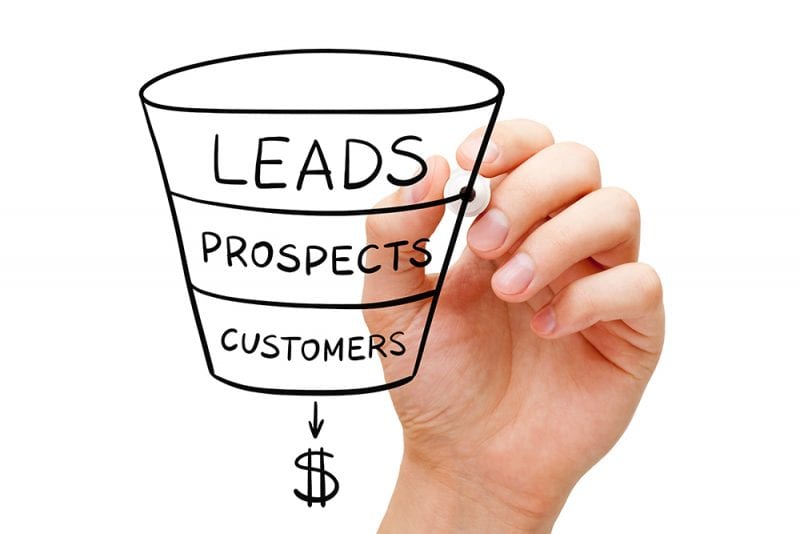
Once you’ve captured your leads, you can nurture them through the sales funnel, eventually turning those leads into customers (and hopefully, loyal customers).

Ways To Generate New Sales Leads

The following are a few inbound tactics you’ll want to implement in order to generate new leads:

1. Create blog content

Setting up a blog and regularly publishing high-quality content that’s relevant to your brand is an excellent way to generate new leads for a number of reasons. The following are just a few ways that content can help generate leads:

trends in social media

Relevant calls-to-action can help capture leads who are reading your blog content.

Quality blog content builds brand authority, which increases the amount of trust the public has in you. This means that leads will be less hesitant to provide you with their personal information when filling out forms.

Quality blog content is more likely to be shared by your leads on social media, providing it with more exposure to more potential leads.

Properly optimized blog content can help bring more leads via organic traffic from search engines.

Related Article: How to Have a Successful Blog (Expert Tips)

2. Run PPC ads

PPC (pay per click) ads can be incredibly effective for attracting highly motivated leads. Many businesses use PPC ads on search engines like Google and Bing to find leads who are already in the advanced stages of their buyer’s journey and are looking for specific solutions to their needs or problems. PPC ads can help attract these leads and drive them to your website.

3. Offer free trials

Consumers who are looking for potential solutions to their problems or needs will be attracted to the opportunity of signing up for a free trial, especially if they are under no obligation to buy. It’s an excellent way to draw leads who aren’t quite sure what product or service they want to go with (in terms of brand) or even whether it will fulfill their specific need.

4. Engage on social media

Engaging on social media by taking part in community discussions or posting comments on relevant topics can help you attract leads. You can ev

en post contests that are relevant to your brand that require users to follow you in order to participate. Your followers are leads that you can continue to nurture through social media engagement and that you can drive towards your website via content and other offers.

5. Implement a referral program

An undervalued method for sales lead generation is by getting current customers to do it for you. You could implement a referral program that rewards customers for referring leads to your brand with discounts or other similar rewards.

As important as sales lead generation is, it’s not always about generating as many leads as possible. Yes, the more quality leads you to generate, the better, but not all leads are of high quality. For example, you can technically buy leads. The problem with this is that the leads you’re purchasing may not even be familiar with your brand, which means that they may not even have the problem or need that your solution is attempting to address. Focus on generating your leads organically and you’ll create a much better chance of converting them.

17 SEO Myths
New call-to-action