use tiktok to reach engagement group

How Much To Advertise on Instagram And Why It ‘s Worth The Cost

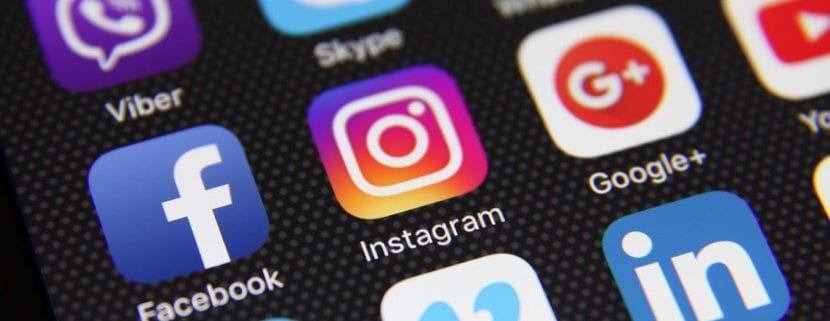
As many businesses have realized, visual content engages leads much more effectively than written content. The reason is simple: humans are visual creatures and process visual information 60,000 times faster than text. It’s no wonder why social platforms that focus on visual content are growing in popularity. Take for example Instagram, which as of 2018 had almost one billion active monthly users. Studies have revealed that the engagement rates of brands on Instagram are ten times what they are on Facebook. If you’re not leveraging Instagram to advertise your brand, then you need to begin doing so. The following are a few questions you might have about getting started on Instagram.

How Much To Advertise On Instagram?

First of all, using the basic features that Instagram offers is free. This means that you can post content without having to pay for it. For example, you can just post images or short videos on a daily basis with basic captions. While you can get a lot out of the free features of Instagram, to really increase engagement you’ll want to invest in Instagram ads.

When setting up an Instagram ad, you’ll only pay for the number of clicks your ad actually gets. You bid how much you’re willing to pay per click. This determines how competitive the ad will be (a higher bid means a more competitive ad). You can also set limits on how much you spend per day, meaning that you’ll never go over budget. As to how much you can expect to pay per click, most Instagram ads run somewhere between $0.50 and $1 a click. However, in more competitive industries, that CPC (cost per click) rate can certainly be a lot higher. You can also pay on a CPM (cost per mile), which focuses on impressions. On average, it costs around $5 to $6 per thousand impressions.

Similar Article: Social Media Solutions: Understanding The Importance of Social Media Engagement vs. Following

How Can You Use Instagram Effectively?

The following are a few tips on how you can use Instagram ads effectively:

Know your audience – Instagram ads lets you define your audience (including by age, location, language, interests, behaviors, and more). Not knowing who your audience is will make it more difficult to define the right audience to advertise to. As a result, your ads will not be very cost-effective.

Choose your placement – You can choose where your ads will be placed, such as on Instagram feeds, Instagram stories, Facebook feeds, Facebook instant articles, or on the right column of Facebook. You can even choose to target certain devices (such as mobile devices) or operating systems.

Find influencers – Tagging influencers or reaching out to them to see if they want to promote your brand can help to lower your ad costs significantly due to the number of relevant followers they’re likely to have.

Track your relevance score – Facebook has a relevance score that you should track to identify how efficiently your budget is being used.

What Makes Instagram Worth the Cost?

The following are a few of the main reasons why it’s worth investing in Instagram ads:

Target specific leads – You can target specific demographics in specific locations, thereby making your ads more effective at engaging a target audience.

Reach a massive audience – Not only can you target countless users on Instagram, but because it’s owned by Facebook, you can run your Instagram ads on Facebook as well

 Use outside links – While you can’t include clickable links, you can include any link you want in the caption (users just have to copy and paste it). This means you can drive viewers to any landing page you want.

Create longer videos – Instagram limits videos to 15 seconds in length unless you’re using Instagram ads, in which case your videos can be up to 30 seconds long. There are many social channels that you can advertise on, but Instagram is one of the most effective at generating user engagement. This is especially true if you invest in Instagram Ads. When looking into how much to advertise on Instagram ads, understand that you’re only paying for clicks or impressions, making it a very cost-effective strategy.
social media marketing
marketing optimization

A Guide to Successful Marketing Optimization

Trying to manage all of your marketing efforts can be a time-consuming process. There are only so many hours in a day and if you have a robust marketing strategy, then finding time to perform basic marketing tasks can be challenging. It’s why marketing optimization is so important. The idea of marketing optimization is to improve the efficiency of your marketing efforts and maximize your desired outcomes. Effective marketing optimization can help make your strategy easier to manage and more successful to boot. The following guide lists the steps you need to follow to begin utilizing marketing optimization.

Steps You Need to Follow for Marketing Optimization

1. Analyze Your Marketing Data

You’re not going to be able to optimize your marketing efforts if you’re unable to identify existing issues and challenges facing your marketing process. Collect and analyze data about your current campaign and website performances in order to identify various weaknesses and/or inefficiencies within your marketing strategy. For example, maybe your email list grows at a sufficient rate, but email open-rates seem to be going down. Or maybe your social media follower numbers are growing, but your web traffic isn’t.
2. Identify What Issues Need Addressing

After analyzing your data, determine what areas could benefit most from marketing optimization. There are a few common ones to consider.

  • Advertising

    Narrow down your audience by identifying your business’s buyer personas. When you have a detailed description of your ideal customer, you can focus your ad campaigns on the correct audience. When you’re reaching the right people, you no longer need to worry about wasting money on failed campaigns.

  • Landing Pages

    If your landing pages are not generating traffic or leads, you need to look into ways to optimize them. Your social media, SEO and paid advertising should all be leading back to your landing pages. Review each page’s copy and see if it relays the correct message you want your audience to see. If your copy does not align with your company goals and values, visitors will get the wrong message. Additionally, rethink your layout and design, including font, colors and images. You can use different CTAs to test what your audience responds most positively to.

  • Emails

    Your email audience is important because you already know they opted in to hear from you. You want to keep them engaged and interested in your business. You need to optimize all aspects of your email campaigns, including times sent, layout, copy and audience. Look into automation tools that will help.

Email Marketing Metrics You Should Keep in Mind and What They Mean

3. Determine Automation Opportunities

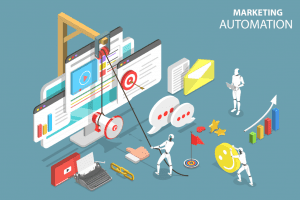
In addition to identifying issues that need to be addressed in your marketing strategy, marketing optimization also allows you to identify opportunities for marketing automation. Automating certain processes can help improve results by speeding up the completion of tasks and improve accuracy by minimizing errors. The use of automation also helps cut down on tedious, time-consuming manually done tasks, therefore giving you and your team a significant amount of time to dedicate to more important jobs.

Take the previous email marketing example. You likely have customer emails that no longer exist, are no longer being used, or the recipients haven’t engaged with your brand for a long time. To remove them, you can implement an email validation (also referred to as email verification) automation tool. Such a tool can comb through your email list and automatically find non-responsive email addresses to remove. This gives you more time to focus on the content of your emails and tailor them toward the active recipients. It also takes the inactive recipients out of your analytics, giving you a more accurate representation of your email performances.

You can also use automation to segment your email list using the personal information you have from your recipients. Segmenting your email list can improve your ability to email relevant content to different recipients. This boosts your email open rate and improves the overall effectiveness of your email marketing strategy. Making your content more relevant to recipients means they’re less likely to ignore emails or unsubscribe from your email list.

4. Execute Your Plan

Optimizing your marketing strategy isn’t as easy as simply doing it. You need to obtain organization alignment, which means working with your team to prioritize responsibilities and inform the proper stakeholders. Certain stakeholders can provide insight into the process, after all. This helps you highlight the goals that you want to achieve. You also need to make sure that you have the resources to execute your plan. Your team may already have a plate full of responsibilities. You will need to efficiently manage who is responsible for what task and how they need to prioritize their work.

5. Continue To Optimize Your Marketing Efforts

Optimizing your marketing strategy may take some time depending on the resources at your disposal. However, once you finally execute your plan, you still need to continue optimizing your marketing strategy. There’s no guarantee that the changes you’ve made will be effective, after all. You’ll want to keep collecting and analyzing data so that you can continually find ways to further optimize your marketing efforts. You may discover that you missed more ways to optimize your marketing strategy. Odds are you’ll be implementing new tactics that will need to be optimized as well.

Marketing optimization allows you to pinpoint problem areas in your marketing strategy and to address them. Optimizing your marketing strategy also gives you the opportunity to obtain a big-picture view of your marketing efforts. This makes it easier to prioritize your tasks and ensure that you’re focusing on the most important tasks at hand.

30 Greatest Lead Generation Tips
50 powerful call-to-action phrases

3 Helpful Tips To Improve Your CTAs To Generate More Leads

Calls-to-Action (or CTAs) are images, buttons, text, etc. that prompts one of your website visitors take some kind of action. CTAs could be trying to get visitors to download a white paper, read an article, or contact for more information. Improve CTA is the beginning to convert website traffic into leads.

Here are three ways for you to improve your CTAs and to make sure they are maximizing their presence on your website and generating the most contacts.

1. Use Action-Verbs and Be Specific

2. Grab Attention Immediately

3. Test Your Results

Read more

How Having a Real Time Location System Can Benefit Campaign Performance

As you likely know, mobile marketing is an incredibly effective way to reach a significant part of your audience. Companies that aren’t leveraging mobile marketing at this point are at risk of falling behind their competition if they haven’t already. However, while most businesses understand that they should optimize their online content for mobile use, not everyone is taking full advantage of what mobile users can offer. For example, a real time location system can tell you where your audience is, which can be incredibly beneficial for improving campaign performance.

Using a Real Time Location System to Improve Campaign Performance

Smartphones have built-in GPS that pinpoints where the user is. This is data that you can access as long as you have permission from the user. You will need to offer an app that the user can download in order to access this data. Some users are going to disable the real time location system as a way to keep their privacy. However, a lot of people don’t mind if your app provides a helpful location-based feature.

The Benefits of a Real Time Location System

Being able to track the location of your users can come in use in numerous ways. Not only can you use this information to measure the effectiveness of your inbound marketing strategies, you can use it to better target your audience. The following are a few examples of how using a real time location system to improve your marketing efforts:

  • Target users near your stores: You can automate certain push notifications to be sent out to users who are within a certain radius of your stores. This is a great way to target users who may not know that they are near one of your stores. Even with users who know about your store’s location, you can send out content that might convince them to drop in. Sending them a special discount code that they can use there is a good example. It’s an incredibly effective way to increase foot traffic to your physical locations.
  • Target users near your competition: You can even use your real time location system to steal customers from your competitors. For example, your users might be headed to a competing store or are near a competing store. You can send them an offer to match any promotions they might be offering.
  • Improve reach: You can figure out what areas the majority of your users tend to be in. This can give you a lot of helpful information that you can use to improve your reach. For example, if you’re based in Philadelphia but you notice that a lot of users are in the NYC area. You can then use that information to target those areas. You can do soCampaign Performance by creating more location-based content or even by opening a store in that location.

  • Measure foot traffic. Measure how effective your mobile marketing efforts are by measuring foot traffic in your physical stores. For example, if you send out notifications of an in-store sale to your users, you can then identify how many users ended up going through the store on the day of the sale. You can use the foot traffic you measure at your stores to judge the performance of specific marketing tactics in many other ways as well.

As you can see, using a real time location system can be hugely beneficial to your cross channel marketing efforts. The trick is knowing how to implement it. These are just a few examples of how you can use the location data you have access to. This can help optimize your marketing campaign and improve sales.

Learn To Use Social Media To Find New Leads
blog vs vlog

Blog Vs. Vlog: Why Your Business Should Begin Vlogging

The blog has long been one of the preferred tactics for content marketing strategies. Using a blog, you can easily publish a variety of different content, from written articles to infographics and more. However, blogging isn’t the only content marketing tactic that works. More and more businesses are beginning to vlog as well. The concept of a vlog is simple — it’s a blog in video form. The question is how do you decide which to choose between blog vs. vlog for which type of content?

The Benefits Of A Vlog

These days, vlogging can be done with nothing more than a smartphone, making it both affordable and easily accessible. It’s important to have content available for your prospects and clients that prefer video to text. The following are some of the major benefits of utilizing vlogs.

  • Vlog content is easy to produce

    With advancements in technology, the equipment you need to produce a vlog isn’t as expensive as you might think. Of course, you’ll want to spend some money to ensure that the quality of your video content stands out from the pack, but it’s more affordable to do so now than ever before. They also give you an easier way of explaining blog topics that you think would be better demonstrated visually. Words alone can not properly convey every idea.

  • Vlog are engaging

    Vlogs are incredibly engaging and there’s a simple reason for this. Not only do people more easily consume visual content, but vlogs also allow you to showcase your personality. They provide a person, whether it’s someone in your company, a customer, or an actor, to represent your brand. By having someone on screen, viewers will be able to engage on a personal level much more easily. This is difficult to do with written content since you can’t immediately convey a personality.

  • Vlogs are mobile-friendly

    It’s much easier for people to watch videos on their smartphones than it is to read blogs. Reading is more challenging on smaller screens, while videos can display in full HD and will run smoothly. It’s why half of all video content is viewed on mobile devices. Additionally, people who are watching videos on mobile are more likely to share. It’s estimated that 92 percent of people viewing videos on their mobile devices tend to share videos.

How Businesses Can Use a Blog To Strengthen Their Online Marketing Efforts

Choosing Blog Vs. Vlog

Many of the benefits of a vlog are advantages as well. Because of the fact that vlogs are video content, they are inherently more engaging, shareable, and mobile-friendly than blogs. However, you could argue that blogs are easier to produce — although some might not agree since blogging does require writing and editing skills. The thing is, there’s no necessity to choose between blog vs. vlog. Why not implement both? Both written content and video content have a place in your content marketing strategy. And when it comes to content, it’s good to have a variety. By providing your audience with content they can both read and watch, you cover all of your bases. Now the question becomes when do you blog and when do you vlog?

How to Have a Successful Blog (Expert Tips)

When to Blog or Vlog

Blogging is a great way to get a lot of information across to your audience. For example, if you have a lot of statistics that you want to share, then an infographic or a bullet list can be more effective than rattling them off on video. However, when it comes to things like tutorials or demonstrations, vlogging is going to be more effective since you can show your audience instead of having to tell them. It also depends on the message you want to convey. If you want to build a real connection with your audience, a vlog might be better suited as they can see and hear another human being. Even if you already have a strong connection with your blog audience, vlogging can only improve it.

Vlogs also work well for your social media posts. Platforms such as Facebook, Twitter and Instagram are great places to share vlogs and get more people interested in your content due to easy sharing features. Since it’s a video sharing platform, YouTube is the best place to be uploading vlogs. Users receive video recommendations based on other content they have watched which makes the likelihood of the correct audience finding your videos greater. While links to blogs can be shared on social media, audiences are unable to view the entire content without going to another website. Vlogs can usually be viewed directly on the platform they’re shared on such as Facebook or YouTube, or a snippet of them can be shared on Instagram and Twitter, depending on the length.

There are advantages to both blogging and vlogging, but there’s no reason to limit yourself to one or the other. Both can be incredibly effective at informing and engaging audiences as well as attracting and converting more leads. In the end, it’s the quality of the content you create that matters most.

25 Website Must Haves

Market Segmentation

6 Types of Behavioral Data That Can Be Used For Segmentation

Behavioral Data is the way that your users behave provides you with significant insight into your audience, your website, and even your products and services. You can use this information to segment your users so that you can more effectively target them using a variety of marketing techniques. This strategy is known as behavioral segmentation.

Behavioral Data Examples for Segmentation

You will need to use analytics in order to look at a variety of different metrics that will reveal behavioral data. The following are six metrics that can help you gather behavioral data to use for behavioral segmentation:

1. Page view history

Seeing what pages a user is visiting can give you a good idea of what they’re looking for. You can also identify pages that they are spending most of their time on. This reveals the content that interests them. Looking at their page view history (as well as the pages they’ve spent a lot of time on) will help you gather information on what subjects they’re most interested in. This will allow you to provide more custom cross-links for related content. It can also direct users to content that’s more likely to interest them.


2. Email opens

Just because a lead is on your email list does not mean that they are reading all of your emails. Identifying what emails they are opening will give you a good idea of how to follow up those emails with custom messaging and retargeting. You can also better understand what headlines and messaging times get the most open. This will allow you to adjust your email strategy so that it’s more effective.

3. Social engagement

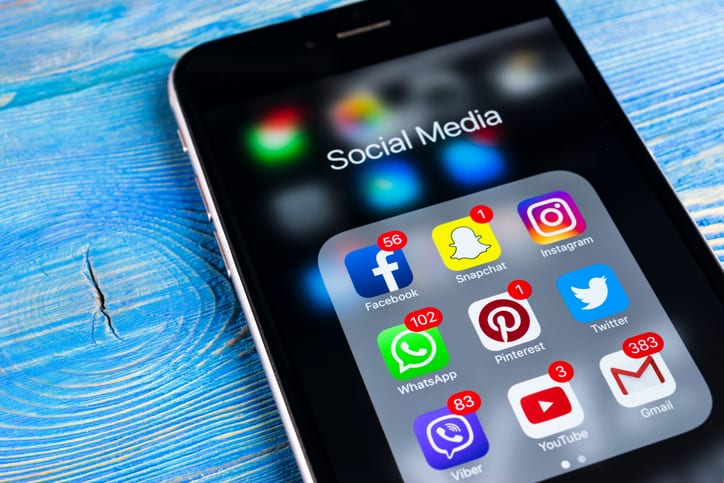
Social engagement is identified by the content that users like, share, or comment on. You can track the social engagement of your users. This helps identify what types of content they engage in with most to tailor content that’s more to their liking. You can also share content with them directly to engage with them more personally. This will help build stronger relationships.

Read More Related Article – Improve Your Marketing Strategy By Asking These 4 Questions

4. Videos watched

More people are now watching videos on a daily basis due to how easy it is to access them via mobile devices. Keep track of your user’s video-watching history so that you can let them know when you publish similar video content in the future or so that you can send them more content (video or non-video) based on the subject matter of the videos they’ve watched.

5. Purchase history

Tracking what your customers have purchased will let you know their needs and wants. This will make it easier for you to send targeted offers and identify cross-selling opportunities. Remember, buying history isn’t just limited to what your customers are purchasing. It also includes when they are making those purchases. You can target them using offers on dates that they tend to make their purchases.

6. Product usage

Depending on the product or service you’re selling, you can gather data on its use. For example, if you sell software, then you can track how often it’s used. This allows you to upsell heavy users. This also allows you to send targeted content to users who aren’t using certain features about features. Lastly, it can re-engage users who aren’t using your software often.

These are 6 behavioral data examples for segmentation that you can use as well. By paying attention to your users’ behavior data and using that information to segment your users, you can greatly improve both the effectiveness and efficiency of your marketing efforts.

30 Greatest Lead Generation Tips

How To Outshine Your Competition with Effective Ecommerce Marketing

While not all businesses have an e-commerce page, many do. If you’re selling products or services online, you’ll want to make sure that you have an effective ecommerce marketing strategies. If you don’t, it’s going to be difficult to stand out from all the other e-commerce sites out there. Through the use of digital marketing strategies, you can build awareness of your ecommerce page as well as generate more traffic. Thereby, you can improve your chances of closing sales. The following are a number of effective ecommerce marketing tips that will help you do just that:

Ecommerce Marketing Tips

social media

Diversify Your Social Media Presence:

One of the big challenges of ecommerce marketing is figuring out what social media platforms work best for certain markets. You won’t want to pour all of your resources into one or two social media platforms, only to realize that they are ineffective for your e-commerce site. Instead, diversify. Establish a presence on several social channels and use analytics to determine which platforms are successful and which aren’t. Finally, ditch those that don’t work and focus on those that do.

Create Original Content:

Some companies will use existing content because they want to focus more on other business tasks. However, unique content is much more likely to have an impact on potential customers. Creating original content will help improve engagement with prospects, and bring more potential customers to your e-commerce page. Additionally, you can use the content you create to teach consumers about your products and services.

Personalize Your Content:

Personalizing content, such as the emails you send to your leads, can contribute to an increase in revenue. This is because content will be more engaging if you address the lead by name, and tailor content to meet their needs by using collected information. If it feels like you’re actually writing to your leads, and not just sending out advertisements to everyone on your email list, you’ll be more likely to capture their attention and improve your odds of conversion.

Similar Article: Improve Your Marketing Strategy By Asking These 4 Questions

Implement A Loyalty Program:

As focused as you may be on finding new customers, don’t forget about your existing customers. The majority of your revenue will come from regular customers. Regular customers are important because they are more likely to act as brand ambassadors that can help drive more potential customers to your site. Implement a loyalty program that rewards them for their business. This can include offering special promotions based on their purchase history, or offering some sort of reward point program.

Optimize For Mobile Use:

Many customers shop for products and services on their mobile devices, such as smartphones or tablets. It’s also how they consume content and engage on social media. If your e-commerce site isn’t optimized for mobile use, you will miss out on a significant number of potential customers.

 Automate Social Networks:

To successfully leverage social media and bring in more customers, you’ll need to have much more than just a social presence. You’ll also need to engage on a regular basis by posting content regularly. Otherwise, followers will forget about you and your social presence will become irrelevant. However, this can be quite time-consuming, which is why you should automate some of your social media tasks. For example, you can use automation tools to post content at specific times based on your schedule.

Digital marketing is a must for any business that maintains an e-commerce site if they want to stand out. These are six marketing tips for ecommerce you should follow to improve your ability to attract and retain customers.

Inbound marketing will help you grow your business by attracting website visitors, converting them into leads and closing leads into customers
buyer persona

How To Implement A Customer Retention Program for Long-Term Success

Customer retention program that allows you to continue to engage with existing customers so that they will continue being your customer. Inbound marketing is a very involved, long-term strategy that businesses put a lot of time and resources into – as they should. However, one of the issues that many companies have is that they focus so much on attracting new leads and nurturing them that once they finally close the sale, they act like they crossed the finish line. This is a huge mistake. The best customers aren’t the new customers, they’re the existing customers that continue to make purchases. In fact, it’s estimated that improving your customer retention by as little as five percent could potentially increase your profits by as much as 95 percent.

The following are a few tips on how to implement a successful customer retention program.

Regularly Ask For Feedback media mix

Ask for customer feedback, whether it’s about the quality of your products or services, their experience dealing with your customer service, what would make your service better, or even about the function of your website. You can do this via email (NPS surveys are great for this), social media, or even a feedback page on your site. Feedback lets you see where you stand with your existing customers.

If someone had a less than stellar experience, you can even reward them for providing you with honest feedback with a special promotional offer (thereby helping offset the less than stellar experience and hopefully showing them that you’re taking their feedback seriously). Not only are you showing customers that you want to know how their experience was, but it actually provides you with a lot of insight into how you can improve the customer experience to increase customer retention in the future.

Establish A Customer Loyalty Program

A loyalty program is one of the best ways to retain customers, yet many small businesses don’t have one. There are many ways that you can implement a loyalty program. You can provide discounts or free shipping based on how many purchases they’ve made or you can establish a rewards program based on points earned for purchases that they can use towards other products or services.

Similar Article: How To Develop Content To Build Customer Loyalty

Provide Live Chat On Your Website

While a chatbot can be helpful as well, having a live chat feature on your site will allow your customers to speak with an actual human. You can choose what pages to have your live chat box appear, such as your customer support page or your client login page. By offering this feature, you greatly improve the experience your customers have since they’ll be able to ask questions or report any issues that they might be having without having to wait to speak with someone.

Follow Up On Dormant Customers

Pay attention to customers who haven’t made a purchase in a while. Make sure you follow up with these customers just to keep your brand on the top of their mind. For example, you could email them an offer on a product that they bought before to encourage them to buy it again. Or send them content that can enhance the use of your product or service.

Customer retention programs are essential to the success of your marketing efforts. Without customer retention programs, you’ll end up losing the customers that you spend so much time and effort obtaining. These are a few tips on how you can implement effective customer retention programs into your marketing strategy.

Free Marketing Consultation

Simple Ways that Small Businesses Can Use Data to Build Better Customer Relationships

In this day and age, it’s pretty difficult for consumers to not be inundated with dozens of advertisements. As such, targeting your audience has become more important than ever, especially when it comes to running a smaller business. The most effective way to target your audience is to make use of the consumer data that you have access to. Knowing how to use the data you have can go a long way towards building customer relationships.

However, having consumer data is a lot different than knowing how to make it actionable, which can make the data you have very intimidating. The following are the three steps that you should take to so that you can leverage your data to build strong customer relationships:

1. Organize

Collecting data is the easy part. You can obtain valuable customer data from a variety of sources, including your opt-in forms, customer surveys, and even by simply asking direct questions on social media. Organizing this data is another matter. You’ll want to use the data you’ve collected to segment your audience based on shared traits. For example, you could organize your customers by their location, by their level of engagement, or by their purchase behaviors. This allows you to personalize your content much more and is especially helpful for strategies such as email marketing.Customer Relationships

2. Find Insights

When organizing the data you’ve collected, you can find insights into your customers that you may not have noticed before.  If you’re segmenting your audience by location, you may find that a significant part hails from one area you didn’t know about. For instance, say you’re based out of Chicago and you sell winter clothes. You may have been focusing mostly on marketing your products to the midwest. However, from the data you’ve collected, you may find out that you actually have a significant amount of customers located in the NYC area. You can use this information to your advantage to increase your reach. One way would be by sending content to these customers based on their time zone. You could create content that’s more relevant to them, or even consider opening a store in the area.

3. Use Visuals

When leveraging the insights you’ve gathered into your customers from the data that you’ve collected and organized, you should strongly consider creating more visual content. While written content can be effective as well, it’s worth noting that the human brain processes imagery 60 times faster than it’s capable of processing text. If you want to take advantage of those insights, you should create more visual content. Even adding pictures to your written content can be extremely helpful when it comes to engaging your audience.

One of your main marketing goals should be building better customer relationships. To do this, you need to make effective use of the customer data that you already have access to. Use the customer data that you’re constantly collecting by organizing it and gathering insights based on it. Then leverage it to your advantage by creating visually engaging content.

Integrating Social Media & SEO Efforts For Enhanced Search Engine Results

Six Steps To Better Use Of Marketing Analytics & Dashboard

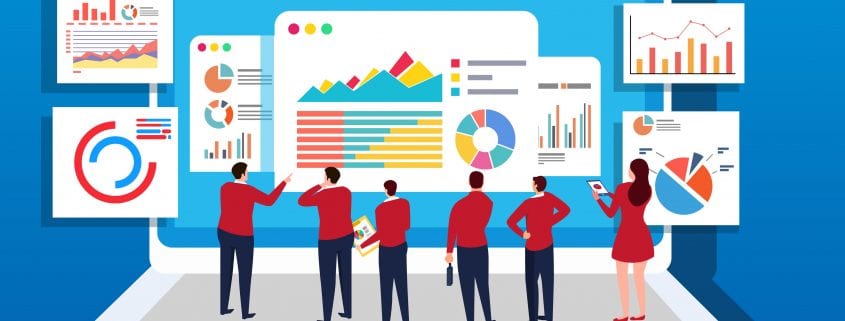
Using marketing analytics is essential to being able to judge the performance of your marketing efforts. They allow you to see what is and isn’t working in real time, thereby letting you adjust your strategy. Not only do marketing analytics improve your marketing efforts, but they also make you much more efficient. You don’t end up wasting a lot of time and money on tactics that aren’t working.

Considering what an essential part your marketing analytics dashboard plays in the effectiveness of your marketing strategy, it should come as no surprise that marketing analytics continue to grow in importance, with many companies devoting bigger and bigger portions of their budget to their analytics capabilities. To ensure you’re making the most out of your marketing analytics dashboard, be sure to follow these six steps:

1. Embed Analytics Into Marketing Decisions

Analytics should not be a mere complimentary tactic to your marketing strategy that allows you to see how you’re doing — it should be an important part of the marketing decision making process. Once you begin using analytics, you should use the data you’ve gathered from previous campaigns to help inform future campaigns and strategies.

2. Use Your Analytics For A Better Understanding Of Your Customer

Marketing analytics can help provide you with incredible insight into your customers, thereby providing all kinds of opportunity for growth. The challenge is in collecting data from a wide range of data points. The reason that this is a challenge is that there are often barriers between marketing, operations, and sales data. If you can gather and analyze data from all three of these facets of your business, you’ll be able to get a more complete picture of your customer, thereby allowing you to form a much more effective marketing strategy.

3. Develop And Hire Talent That Understands Marketing Analytics

Marketing analytics is unique in that it requires analytical thinking to read and understand the data, but it also requires creativity to put that data to use in actionable steps. You’ll want to focus on developing and hiring talent that understands both the science of analytics and the art of analytics, which is no easy feat. However, having such individuals on your team will help you get the absolute most out of your marketing analytics.

4. Organize Your Analytics Operating Model

If you’re going to embed your marketing analytics dashboard into your company’s marketing decision-making process, then it’s important that you organize its operating model to reflect how decisions are made. For example, if your company makes your marketing decisions by brand, then you might want to dedicate analytics resources.

The Buyers Journey Explained Stage By Stage

5. Focus Marketing Analytics On New Opportunities

One of the common traps companies fall into is using their analytics to adjust their marketing tactics on current strategies. While you should certainly do this, you should also leverage certain marketing analytics, such as data mining and predictive analytics, to find new opportunities, such as new marketing strategies, new business models, new markets, and more.

6. Learn When To Measure And When To Act

The use of analytics allows you to analyze and measure data at any time, but knowing when to act on that data you have can be tricky. There’s the temptation to want to wait until you can measure everything and obtain more data before making key decisions. Waiting too long can cause you to miss out on potential opportunities. On the other hand, constantly acting on the data you have can be a serious mistake as well. Many strategies do take time before you’ll begin seeing results.

As you know, using analytics will help you get the most out of your marketing strategy. These tips will help you get even more out of your marketing analytics dashboard.

buyer persona guide for business